Thursday, 30 September 2010

Sydney Oprah House

Details are spilling out thick and fast concerning Oprah Winfrey’s decision to launch the final 25th season of her talk show here in Australia. Judging by the audience reaction to the news (delirious doesn’t quite cover it), you wonder how on earth such a thing was kept a secret, not just from the audience and crew (who will also be going with her, all 300 of them), but also the whole country of Australia. During confidential negotiations which lasted a whole year, the planning was referred to as ‘Project O’ by the New South Wales government.

Oprah’s Ultimate Australian Adventure takes in eight days of filming at some of Australia’s most iconic sites, from the Great Barrier Reef to the Sydney Opera House as well as the chance for the audience to “sample shiraz in Aussie wine country and shop ‘til they drop in trendy Melbourne,” says Winfrey, as if quoting directly from the press release. Of course, Oprah don’t come for free: details concering the costs involved show that Tourism Australia have shelled out $1.5 million for her visit, while the NSW state government have chipped in somewhere nearer the $2 million mark. But it’s small fry, really, when you consider that Oprah is practically a messiah to millions (40 million US viewers, to be precise), and that her show is broadcast in 145 countries. The opportunity to sell Australia as a prime tourism hot spot looks set to do much more than both Crocodile Dundee films combined.

But here’s the detail I love: in truly extravagant style, the audience will enjoy an all-expenses paid trip as well as their very own Motorola smartphone, and they will be flown to Australia by none other than celebrity guest pilot John Travolta. I don’t quite see the connection myself, unless maybe Travolta gets to pocket the Qantas plane once he’s done with it.


It may sound clichéd to you, but anyone looking for a cataclysmic difference in good manners between the English and the Australian should maybe try riding with one of Brisbane’s city bus drivers. “How long has the Red Rooster been shut?” says one driver, and not to me, either, but to another clueless passenger, who does luckily know more about the fried chicken franchisee situation in the western suburb of Ashgrove than I do, enough to at least manage a response of, “err, about four months, I think.”

“Did it just chip off somewhere or has it closed for good?” At this point I figured that maybe the driver was demanding a little too much information from his baby faced bystander, but he continues anyway. “Because you don’t often hear of Red Rooster shutting down.” This may well be true, although the residents of Brisbane are hardly underserved when it comes to drive-thru options. But that’s not the point. All I could think about during this whole exchange was, “What the hell is the bus driving doing talking to people?”

Naturally, as an English person who is yet to meet a nice bus driver, you’d have to put this down to an anomaly, a freak mix up of forms at Queensland Transport, perhaps, resulting in a mild-mannered lollipop man suddenly finding himself driving the City Glider. But then this happened: not only did I flag down the wrong bus, but upon telling the driver so, he then proceeded to pick me up anyway only to deliver me to the correct stop, without once asking for payment.

Now that’s weird. What’s even more strange is that this has actually happened to me on more than one occasion (Brisbane can be a complicated place). So, while exulting in the delights of friendly bus drivers though still suspecting the whole thing to be some kind of Jeremy Beadle style ruse, imagine my sheer delight when I stepped on board the 380 earlier today, and was greeted by this: “Hello mate and welcome to the happy bus! Welcome aboard the three eighty!” And no, I’m not making this up.

The driver beamed this quite loudly so that every seat should know their astounding luck to have purchased a seat on the happiest bus in Brisbane. He then proceeds to yell this information at all incoming and outgoing occupants. Given such enthusiasm, he had to rush his farewell words as people disembarked, similarly bemused, so his goodbye gesture sounded more like, “thankyouthankyoufortravelingwithustodayandhaveagreatrestofyourweek!”

Still, it’s the extra effort to be jolly which counts. As for whose benefit (his or ours) it barely matters; after all, such uncustomary theatrics are especially welcomed during one of the most mundane things you can ever do in life: the act of riding on a bus. The only thing more mundane is having to wait for it in the first place.

Of course, if a British bus driver performed a similar escapade, we’d probably all internally accuse him of some form of deep-seated sarcasm or at least a hint of self-loathing, both for his job and his passengers, either that or as someone so unhinged that they probably shouldn’t be operating heavy machinery. I thought the same thing myself for a while, that maybe I had caught the bus driver in a Howard Beale mad-as-hell style meltdown, a la Network, half expecting him to yell “I’m not gonna take this anymore!” and slam the bus into the river. Anyway, I was still thankful for occupying the happy bus. It may have been a somewhat self-conscious happiness, but that is still better than no happiness at all.


AU Tube: Understanding Australian TV
Four Weddings’ (Channel 7)

I’ve found myself watching far too much of this show, which is essentially a catty, reality-based bitch fest where four Aussie brides are welcomed to each other’s weddings in order to rate them on a list of criteria, including the dress, the ceremony, the food and the reception. The bride with the most votes wins a Luxury Five Star Top Secret Honeymoon!

Clearly two things need to be mentioned. Firstly, that the grooms have no involvement in this, barely referenced it seems, and are completely sidelined in favour of virile brides looking to rain on their own parades. Which brings up the second issue: just where do we intend to draw the line with this whole bear-baiting process, where reality concepts are created just for the sake of conflict? This show has more in common with the voyeuristic, gossipy columns of Hello! magazine and carries just about as much weight. It’s so absurd that I would like to propose an antithesis to this show, ‘Four Funerals’, where we would follow four grieving widows as they give ratings out of ten for how sad the ceremony is, the quality of the buffet back at the house afterwards and, if it’s an open casket, the state of the corpse. I can almost hear Channel 7 sharpening their pencils.

Anyway, we were still delighted to see the Glengariff Estate on this week’s show, a mid-19th century building and grounds located in the plush Brisbane Hinterland, not just because it’s a lovely venue, but mainly because this is the very same location that we all went to for a wedding just the other week.

On the show this is Lucy’s Big Day. She tells them it’s a ‘bush wedding’, which was clearly misleading, so immediately the grumpy girls are disappointed. “I was expecting some cows,” says one of them. From here on in, Lucy’s ceremony is utterly scrutinised, even if she does appear to be having a wonderful time. “You could actually see the petticoat under the dress,” says one. “Everywhere you looked there were fake flowers,” says another. And the food? “There’s too much potato.” Lucy actually ends up coming last in the competition with 59 out of 130, although having watched this show more than once I can personally confirm that it is particularly hard to get a high score. The girls - as you can imagine for somewhat tactless women with free entry to one of the most important days in anyone’s life - are seemingly not chosen for their generosity.

Wednesday, 22 September 2010

Power Showers

Rain. Big rain. The tropical equivalent of showering with your clothes on. Biblical rain. For five days now, at least. It’s not quite what the Aborigines would call the waltjammirri, the legendary Wet of the Arnham Land in the Northern Territory where floods are a regular and seriously debilitating summer occurrence (while the Murray in the south has recently been prone to terrible draughts, thus perfectly demonstrating the fine balance of natural catastrophes prevalent in this huge and beguiling country). In contrast to England, you still won’t want to wear a coat even when the rain comes: the humidity in Brisbane is a constant, and you’ll perspire in places you never thought possible. Harold Jacobson talks of Australia as the perfect place to get to know your own person, from the hair on your toes to the sweat on your back. “Your body is simply up to more in Australia, and you are more your body. You drip therefore you are.”

I don’t exaggerate the intensity of the rain, by the way, even if it has now slightly subsided. Give it three days or so and the clouds will soon rebel, blackened in moist anger to unleash it’s fury yet again. I never understood what my Australian girlfriend said about the English climate until now: “It never rains in England, not properly.” The ceaseless UK drizzle is apparently the one notion to push acclimatised ex-pats over the edge upon their return to Blighty, where the rain is a steady, monotonous droll. Here, torrential downpours are a cleansing, therapeutic relief, greeted warmly by everyone. “Ah, good,” appears to be the local consensus, “we needed it.” Which underlines another similarity between our two nations: a pride in discussing the weather, even when it’s absolutely pissing down.


Turning 26 in Australia (the wrong side of your twenties, so I’m reminded) was full of happy accidents for me, a series of divine interventions, like the TV screening of Enter the Dragon (the best film ever made) and, just before Brisbane ensemble Velociraptor take to the stage at The Club House, the playing of the new Minus the Bear album over the venue's PA system. Not their best, obviously, but still the sort of subconscious planning that, on any other day, would probably have passed without too much significance. The staging seemed so perfect that I was half expecting my family and friends to walk in, holding a custard apple cheesecake and 26 candles.

The night was made suitably cheerful after watching Canadian rapper Buck 65 (who describes himself as the “Tits Magee of hip hop”), playing as part of the Brisbane Festival - an annual cultural event combining art, music and theatre - which follows neatly on from the festivities of the vibrant Valley Fiesta, the Big Sound unsigned music convention and the Brisbane Writer’s Festival. For those who don’t know, Buck 65 writes acerbic and bleak visions of a mostly apocalyptic nature: from the dusty mirage of the long, desert highway, to sleazy bars, red light districts and the threat of a zombie invasion. I described him as a hip hop hobo, despite his boy band good looks which conflict with a slacker baseball cap and his awkward dancing. He was affable company, invigorating a small, seated crowd in a makeshift big top, telling detailed soliloquies on the time his equipment was stolen and he was kidnapped by strippers. We went to the first night of a two day residency, so god knows how he managed to top that.

The Gallery of Modern Art are showing a retrospective of Douglas Kirkland photography. Kirkland was in his mid-twenties when he took possibly the most iconic images of Marilyn Monroe for Life magazine, in which the actress is famously draped in only a single bed sheet. According to Kirkland, this was her idea, and as the photos clearly demonstrate, it would prove to be quite a steamy encounter. Kirkland, already married and with two children, allegedly refuses Monroe’s advances and instead directs any prevailing sexual tensions through his camera lens. It’s a commendable story, a prime example of self-restraint leading to great art, and Kirkland fondly remembers it without a hint of regret. But I’m sure he still had great fun developing the film.

Anyway, I like this one of John Lennon, taken while filming How I Won the War in Spain, 1966. You’ll also find equally revealing portraits of a roll call of Hollywood’s greatest, including Ann-Margaret, Elizabeth Taylor, Audrey Hepburn, as well as Coco Chanel, Peter O’Toole and Michael Jackson, who the photographer met while working behind-the-scenes on the filming of the 1983 'Thriller' music video, just before the madness.

While I’m equally excited about the world premier of Shanghai Lady Killer tomorrow night, which just about ticks every box for a great night out. It’s a theatrical interpretation of traditional Chinese wuxia stories (sort of martial arts folklore, in a somewhat simplistic explanation) in a futuristic neo-noir setting, concentring on a kung fu assassin in a dystopian vision of Brisbane’s Chinatown. It’s being billed as the highlight of the festival, bringing live action chop socky to the stage and starring Wang Fei, who geeks might remember from Sammo Hung’s recent Wushu movie. Just one of many examples of the cross-cultural appeal of the Brisbane Festival and the fantastic work that the organisers here have done.


Altiyan Childs gets my vote in the Australian ‘X Factor’. We’ve now started on the live shows, and it’s already compelling stuff. The other day my girlfriend walked in to see me catching up on excerpts of the show on my laptop and looked genuinely concerned: “This is becoming a problem,” she said in a defeatist tone, as if I had just been caught rolling a joint.

Childs, a 35 year old forklift truck driver from New South Wales, is like a version of Marti Pellow if he had managed to avoid any sense of achievement. He’s often a tearful mess, saying This Is My Last Chance, but it’s OK, because Ronan Keating Believes In You. (When did this become the barometer for pop success?). The relationship between mentor and pupil has already reached a slightly uncomfortable man-crush stage: “You’ve carried me on your shoulders,” Childs says to Ronan, fighting back the tears and the urge for a deep pash. “A plane didn’t get me here. You did.” Childs, it’s worth remembering, had made a constant series of false starts at boot camp and at the initial auditions where he somehow forgot the words to Kings of Leon’s ‘Sex on Fire’, the main refrain being, “Woah/Your sex is on fire.” Tricky for some, obviously.

Every constipated vocal is delivered as if he’s on borrowed time. Every performance is his encore at Woodstock. At the moment, he’s playing the Chico card: hardly the best singer, but there’s something so impassionedly sincere about Altiyan Childs that you can’t help but cheer and cringe at him, usually at the same time. Check out his first live performance by clicking here, where he appears to be dressed as some hybrid Tom Jones libertine in leather pants. Weird.

Sunday, 12 September 2010

Independent's Day

Do you remember when we were discussing the Australian election, all those many moons ago? Well, the results are finally in. It’s taken so long that you have to wonder whether Burke and Wills were responsible for delivering the memo. Being British, I’m aware of the lack of coverage that Australian current affairs gets in the western press. They could be testing nuclear weapons out here in the Simpson Desert and it wouldn’t arouse UN suspicions for at least a few months. Australia - the world’s largest island, remember - seems so far down under that no one else in the whole western world seems at all bothered by it. So if you do feel this way, feel free to skip to the bit about custard apples. But if you want to know, the country now has a government, and a most interesting one at that.

Needing 76 seats to form a majority, the two main parties (Labor and the Liberal-National Coalition) were both tied to 72 each the last time we spoke. This sparked a two week getting-to-know-you session with a trio of Queensland country independents (all ex-Nationals) who found themselves in the unenviable position of tipping the balance of power. No one enjoyed their fifteen minutes more than Townsville hick Bob Katter (‘Mad Katter’), who wore a cowboy hat to every press conference and bellowed his demands from the podium. He opposes gay marriage, refutes the evidence supporting man-made climate change (are people still arguing against this?) and wants to stop Australia importing bananas. He went with the Coalition.

Even with Green Party backing and one other sympathetic independent, Labor still managed to coax the remaining two conservative indies into joining them, making up their wafer thin majority. Opposition leader Tony The Terminator Abbott must be fuming to find himself still in opposition despite having a larger share of the public vote and taking a storming swing away from Labor. Labor had a rotten election, all in all, and if things go haywire again (like, say, spontaneously dumping your leader), then the next election could well be called Judgement Day: Rise of the Machines. Tony Abbott made an impassioned defeat speech which could have been summed up in three words: “I’ll be back.”

Although Julia Gillard may look happy to still be in charge, she’ll certainly be having fun negotiating those hard fought Labor polices with three independents and the Greens. Toxic Math can’t help but picture a scene involving the normally quiet resolve of a motherly Gillard frantically unravelling as she oversees a party of squabbling babies at bath time. But if it works, then just imagine: multi-billion dollar funding reforms for regional areas, stricter gambling laws and a whole heap of parliamentary reforms, not to mention new hospitals in Hobart. It’s a long way to go, I’ll give you that, but let's give it a chance.


So then, my first gig in Australia turned out to be the West End Community Block Party, hosted by holistic health agents Black Dove Body Bar and situated in their car park, complete with a homemade jewellery stall, tofu hot dogs and tarot card reading. As a last minute addition to my girlfriend’s singing duo - adding percussion to her melodic pop songs and very clever, harmonic structures - we were sandwiched after the African drumming but just in time for those wanting to take part in the Zumba demonstration.

Playing this sort of outdoor community event always conjures up romantic notions of legacies born, memories made and fateful occurrences, like the Woolton Village Fair where Lennon first met McCartney. Perhaps a passing A&R man would happen upon Vulture Street, taken in by the sound of the shaker and my girlfriend’s sweet singing on his way to picking up a coffee and sign us on the spot. Residents would tell news reporters that they were there on that historic day, when the traffic would stop in stunned adoration… But, alas, no. We opted for a ‘meat dog’ after the gig and went home.


There was a fantastic cross-cultural episode between my girlfriend and I the other day, caused by the new music video to ‘Shame’ by Robbie Williams and Gary Barlow, which you‘ll find on YouTube. Their long running feud was a big deal to idiots up and down the UK for many years, so this folksy, self-conscious, irredeemably crass reunion may act as ‘closure’ for some (and not just the two main idiots involved), but it’s somewhat reassuring to know that the whole incident will have absolutely no baring whatsoever on the people of Australia.
“Robbie Williams and Gary Barlow have done a single together - it’s shit,” is essentially what I said.
“Who’s Gary Barlow?” my girlfriend asks, adding: “Is he that paedophile?”
For some reason, I find myself jumping to Gary Barlow’s defence. This isn’t something that I would normally do, but then calling the man a paedophile is going a bit far.
“No,” I say giggling. “He was in Take That…” But that hasn’t made matters any clearer. “Oh right... weren’t Take That very popular here? They were huge in the UK.”
“Who am I thinking of?…” She’s thinking out loud now. “Sparkles?... Gary Sparkles?”
“Sparkles?” I reply. “Do you mean Glitter?”
“Glitter!” she exclaims, “Gary Glitter!”
Quite what this says about fame - or infamy, rather, which is probably the more accurate term - is clearly open for discussion.


I’ll keep my talk of custard apples to a minimum (after all, you don’t read Toxic Math for it’s nutritional guidance), but this fleshy, green-skinned, brain-like structure is a sweet and tropical delight, pictured opposite. I’ve never seen them in the UK, but then I reckon you would struggle to send one back in time via Airmail. Now I just can’t get enough of them, so we try to stock up whenever we're visiting the weekend markets. Aside from halving and scooping out the innards, watching out for any potential choking hazards, if those of you who are more familiar with the fruit have any serving suggestions then Toxic Math would very much like to hear them. Leave a comment, if you can.

Sunday, 5 September 2010

Going for Gold

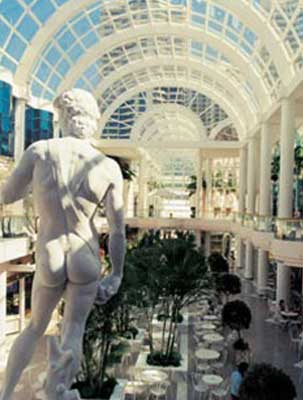
I was excited to see Surfers Paradise on the Gold Coast for a couple of reasons. For starters, my guide book made it sound appallingly curious: “When you’re not sunbathing, swimming or surfing, you can go bungee jumping or just window shop, eat out, socialise or wander through the malls, one of which, Raptis Plaza, is adorned by a full scale replica of Michelangelo’s David.” After reading that I was particularly sold on the idea, but also because I’d been to the Gold Coast before and could just about make out the silhouettes of audacious skyscrapers peering out over the sun-drenched sea in the distance, very mirage-like and ominous. “Surfers Paradise is approached through a thicket of petrol stations, fast-food outlets and motels - a reconstruction of the outskirts of many an American city, and in a very similar taste.” I don’t think that last bit was meant as a compliment, but then Australians (Queenslanders is maybe more accurate) seem to be united in their hatred of Surfers Paradise as representing the more artificial arse-end of Australia’s Gold Coast tourist trap. You could almost sense my girlfriend’s reluctance as she started to make the 40km descent south. “It’s shit as,” she warned me before we’d even got in the car.

But as a Queenslander herself, and quite a staunch one at that, we were trampling over hollowed ground, and her eyes were already glazing at the thought of her most cherished childhood memories. “We used to come here as kids at Christmas,” she said when we reached Currumbin, a beach further south. Or when we passed the courageous windsurfers at Miami beach (Miami beach?) and entered Burleigh Heads, she’d say, “Whenever I come here I get an ice cream from that servo.” This kind of influence makes impartial critiquing quite tricky for a writer, but although I couldn’t really share in her nostalgia (an Australian Christmas at the height of summer, for instance, is particularly different to a British one), I could at least get behind the sentiment: the beaches further south were idyllic, inviting and a perfect place for frolicking as a child. My equivalent was the Rec’ in Swindon, which was essentially a muddy field and some metal swings.

Her mood shifted as we followed the guide book and travelled delicately through the “thicket of petrol stations” which didn’t look too dissimilar to the approach of any other east coast Australian city. Mackay, perhaps. Aside from the tourists who come from all over the globe (but mainly England), the Aussies here are personified by their own ‘look’: “blond, plastic retirees” is what I’m told, those entrepreneurial developers who became wildly rich due to a large-scale property boom which has seen building work continuing to this very day. With an almost year round sunshine, the financial implications for opportunistic capitalism is practically academic. “You’ll start seeing lots of ugg boots,” my girlfriend says by way of distinction, maybe suggesting that those who inhabit the falsity of Surfers Paradise for too long become identikit embodiments of their own environment. I’m about to contest this when a blond haired woman in denim shorts and black singlet steps into her boyfriend’s yellow Lamborghini, and promptly keep my assertions to myself.

Having never been there, the comparison to Miami is lost on me, although I saw a lot more in common with the stills you see of Las Vegas. Surfers Paradise has every hedonistic avenue covered, including small theme parks, strip clubs, Irish themed bars (like the Lansdowne Road Tavern), slogan T-shirt stores, two condom shops, a strip of designer outlets from Prada to Louis Vuitton and even Egyptian themed mini golf (‘King Tutt’s Putt Putt’), in much the same way that the British have carved out replicas of Blighty into the Costa Brava. We encounter two ‘Meter Maids’ inside a shopping centre, dressed only in gold sashes, bikinis and high heels. “We’re collecting for charity,” one of them tells me, although she seems as puzzled by the concept as we are, dressed seemingly for some kind of pornographic rodeo. If they weren’t solely looking to recruit adolescent boys, then I would have seriously considered an alternative dress code.

Of course, quite why Surfers Paradise feels the need to trade on the reputation of other continents and not their own is a moot point: I spot hotels called both the Chelsea and the Dorchester. These are the skyscrapers you can see in hallucinogenic form from the shoreline up and down the Gold Coast: hotels, all as ostentatious as the next, some in towering wave-like structures, others modelled on inner-city tower blocks. My guide book politely describes the skyline as “architectural overkill”. It might be referring to the Marriott here, which boasts its own man made beach, not to mention an indoor waterfall and creek where visitors are encouraged to snorkel amongst the imported tropical fish. They’re currently in the process of building Soul, a multi-million dollar development combining both luxury apartments and retail outlets across 77 storeys. That’s the problem with Paradise, its never quite enough.

Meanwhile, I was struggling to understand what surfers actually thought of it, being as the most inaccessible part of Surfers Paradise was the sea itself, currently behind a wall of construction. Being a nuisance for good punctuation, I now wondered whether the lack of a possessive apostrophe in the name was more than just a grammatical oversight, and that perhaps a distinction needed to be made between just how much ownership Australia’s surfing enthusiasts wanted over this gratuitous exploitation of their sport. I’m told that the surf is better at Currumbin anyway, and that locals tend to visit Surfers only on ‘schoolies’. This is the gap between finishing your final high school exams and waiting for your results, where a cavalcade of stoked underage drinkers head to Queensland’s party capital and ‘get maggot’. It is not uncommon, apparently, for a school leaver to fall from one of the taller buildings, thus somewhat jeopardising their own attendance on results day. I know this to be true, unfortunately, because my girlfriend has seen it happen.

“This place makes 14 year olds act like they’re 21,” she says in moral disgust. Surfers Paradise certainly did revel in a self-consciously reckless air - that much was certain - and I didn’t need to see a group of skateboarding children trying to hold onto the back of a moving bus to work that much out. But there were bigger disappointments that would eventually lead us back to the car. When trying to find the Raptis Plaza and it’s replica of Michelangelo’s David, we had to consult two walking advertisement boards who told us, with no great sympathy, that the Raptis Plaza mall had been demolished some years ago, but not before David had been bought by a secret buyer and sent to a new shopping centre in Carrara. Proof, if proof were needed, that there is just no accounting for taste.


Sunday night. Club X and Y, an underground nightclub modelled on a cage fight. In the outside smoking area, two teenage boys are talking. One is in dark, formal work wear with buffed shoes which suggests that he might work here, the other definitely doesn’t: I quickly figured out that he was the next DJ, starting at 11pm, sat in crumpled designer tracksuit attire, cotton cap and oversized sneakers. He may have been a member of Hodouken!
“In five years time I don’t want to be doing this,” the DJ was saying. “I’m doing five gigs a week. Look at Slinky, man, he only does one gig a month.”
“Yeah, totally,” says his waiter friend.
“You know what Brisbane needs?” The waiter didn’t. “We need smaller, 100 capacity venues and get some niche shit going on.”
The waiter was left in no mind as to who would best provide this, but the DJ persists. “So - even if you don’t like what he drops - who owns it the most here?”
There is an attempt to say another name - Slinky, maybe - but the DJ quickly directs the waiter to a more satisfactory answer. “Well, it’d be you, man.” 


AU Tube: Understanding Australian TV
The X Factor’ (Channel 7)

Another first for Australia! A few months ago it was 24 hour news, now it’s Simon Cowell’s ‘The X Factor’; as Mr Chesty Pants and his cohorts of identikit media cartoons wipe another continent’s collective consciousness completely dry. At least Australia doesn’t have to put up with looking at him on the judging panel all week, but his presence is felt everywhere, like a ghost in the studio gallery. His minions have read the reality rulebook well, and even if the Aussies can’t quite get bona fide pop princesses on their panel (like Cheryl Cole), at least they can get the 90s equivalent.

That’s a slight dig at Natalie Imbruglia, obviously, the diminutive ex-’Neighbours’ actress who turned into the angst-ridden anti-Kylie with great songs like ‘Torn’ and, er, that other one. Being the only lady on the panel, her job is to generally get a bit over emotional. The tears fall during a particularly moving sequence involving cancer-sufferer Karl Dimachki, who sang Lionel Richie’s ‘Hello’ at the Melbourne auditions despite having part of his tongue removed. But generally she’s just a bit too nice, an accusation you certainly couldn’t throw at her sour-faced equivalent Dannii Minogue, replaced because she had the audacity to favour having a family over telling people off on television.

It’s funny seeing Ronan Keating being represented as some kind of volatile Piers Morgan-style mood-swinger when he talks with such an unassuming Irish chirp - he’s more like some form of cheery bouncing leprechaun auditioning for a Gucci ad. He can’t quite do authoritative, and he certainly can’t do angry, best demonstrated on Thursday night when he quite unconvincingly stormed off set because it had “been a long day” leaving some runner with a clipboard to try and coax him out of his dressing room. “We’ve been here since eight o’clock this morning,” he complains, but it’s hard to be too sympathetic when you consider his job is to sit behind a desk and vaguely look interested while being paid a GP’s salary for the effort.

I didn’t know who Guy Sebastian was before this show and, as much as he’s been amiable enough through a long week of auditions, I still don’t really care. He won the first ‘Australian Idol’ in 2003 which at least makes him the most qualified judge on the panel, but being the ‘extra one’ on a reality show is an unstable profession: this seat is essentially a revolving subs bench in which the most pleasant celebrities can be regularly exchanged and ignored. The only member who is making a conscious attempt to stand out as King of the Shits is shock jock Kyle Sandilands, who makes absolutely no effort to hide how much of a shit he really is.

When he’s happy, he says things like, “That was crazy, crazy good.” But he also uses the same faux-exclaimed radio tone when he’s dressing down his contestants, so even his compliments sound twisted. Now, unlike the rest, I can actually quite buy the notion of someone like Kyle Sandilands being a bastard: for starters, he once strapped a 14 year old girl to a lie detector live on his radio show to ask her about her previous sexual experiences, which quickly backfired when she confessed to being raped at the age of 12. He lost his job as head tormentor on ‘Australian Idol’ for that stunt. Unlike Cowell, he doesn’t own a record company, or hold a vested interest in any of this. In fact, he strikes me as one of those DJs who probably doesn’t even listen to music: a frustrated, walrus-like embodiment of Dr Fox, essentially, but nowhere near as endearing.

But we’re living in a saturated, post-Cowell televisual nightmare now, people, an environment where people like Kyle Sandilands are allowed to thrive and prosper. That may not be a reason to stop watching, obviously, but certainly make you reconsider.

Sunday, 29 August 2010

Viva Briz Vegas

So, Brisbane, overshadowed by bigger cities Melbourne and Sydney but still grappling for cultural recognition and a reputation as more than just the Leeds of Australia. I quite like the comparison, personally, having just come from there. But Brisbane could, in theory, be mistaken for just about anywhere else in Europe. For a red dust vision of a wild Australia, don’t come here.

The Kurilpa bridge acts as your gateway between the vast, towering business structures of the city, complete with pedestrianised retailing and the central King George Square (named for George V and featuring these bronzed kangaroos). But head in the opposite direction and you end up in Brisbane’s arty South Bank, known as the Cultural Centre and home to the Queensland Art Gallery, the Gallery of Modern Art, the Queensland Performing Arts Centre and the Queensland Museum, all built in an oppressive 1980s labyrinth-style block structure which would see you open a door at one end only to somehow end up on the roof at the other. I wouldn’t have been completely surprised if Escher had a hand in the town planning.

My bag is taken from me as soon as I step foot into the Art Gallery, perhaps for fear of visitors casually making off with one of the Rodin sculptures. The Hans Heysen exhibition is lovely, covering his full scope of landscapes from his formative years in Europe through to his towering obsession with gum trees, all of which is nicely juxtaposed with the work of Aboriginal artist Joe Rootsey, who disregards the more traditional dot paintings of his people for more striking abstract landscapes of his own. But I’ve chosen to show you one of Peter Booth’s giant modernist paintings instead. It’s just called ‘Painting’ and differs slightly from his more grisly severed head motifs in being, well, nothing but black. Painted in 1974, the label claims that this is a statement piece regarding the ‘anxiety and pessimism of the Cold War and the Vietnam-US war’, but you could tag just about any sort of meaning to a statement like this. Booth just thought it was “strong and beautiful”, and I don’t see anything wrong in leaving it at that.

More great conundrums in the name of art can be found at the Gallery of Modern Art, which is another term strongly open to interpretation. There’s a Valentino exhibition on at the moment, something that will set you back $20. I can't help but feel that the exhibition says more about the glam-class of Brizvegas, which must boast an aspiring number of hot-heeled, seam-savvy fashionistas to rival both Paris and New York seeming as they are the only other cities that will be benefiting from this designer’s display. But the real fun is upstairs, however, because that’s where you’ll find Nam June Paik’s ‘TV Cello’.

Paik is a visual artist famous for using televisions in his work. So, here we have a stack of TVs, some playing sporadic edits of pornography in shock clips resembling something out of A Clockwork Orange, over which he has constructed the strings and framework of a cello, melding both ‘high’ and ‘popular’ culture. I’m not quite sure what I’m supposed to think here, whether the blurring of both classes is a good thing or a bad thing. It all feels quite sinister to me, so I’m going to say that Paik thinks that this is bad thing. Either that or he just really hates the cello.

Directly behind is Martin Creed’s ‘Work no. 189’, an installation featuring 39 ticking metronomes each individually set to a different speed. Creed’s idea is to create a ‘rhythmical cacophony’, which I‘d interpret more accurately as a ‘bloody racket’. Gradually, each one of the metronomes “lose their momentum and stop at unpredictable times… adding to the paradoxical humour of the work.” After some considerable time staring at giant hanging slogan T shirts, ticking metronomes and strangely placed chairs, I start to develop a slight fatigue as my eyes stumble upon a plastic doormat with a reinforced grip. I’m about to see what the piece is called before the doll-like steward returns and reclaims her spot on the mat. Shame, really, because it would have made quite a fitting installation. I would have called it ‘Disrupted Ambivalence’.

Another quick jaunt across the concrete set of Blade Runner and you’ll spontaneously end up in the Queensland Museum, which ticks every school trip criteria going with fossils and dinosaur bones, studies on the nation’s biodiversity and a top floor dedicated to Aboriginal history which thankfully doesn’t completely omit all the bad stuff. There are sections dedicated both to land rights and stolen generations, of Aborigines forced into foreign families or sent to religious schools. It's at the Queensland Museum where you’ll find the current Burke and Wills exhibition, the Englishman and the Irishman who, in 1860, managed to fail most spectacularly in plotting a route for a telegraph line from Melbourne in the south to the Gulf of Carpentaria in the north, a distance of around 2,000 miles across uncharted territory.

Out of all the horrific early explorer stories, Burke and Wills is the one told mostly to school children, probably as a way for them to fully appreciate the dangers of outback travelling, but also as a valuable life lesson in the imperative need to get on with your neighbours. There would be no questioning the mission’s success when the team set off from Melbourne with a huge scale street parade, consisting as it did of 23 camels, 23 horses, 19 men and 20 tonnes of supplies carried over six wagons. This was the most well equipped expedition through the guts of Australia ever conceived. Too equipped, obviously: after two months, they had only managed to travel 500 miles.

It is around this time that Wills first starts to get agitated by the company of the natives, or more specifically, the Yandruwandha tribe, who seem so eager to get him to 'dance' that he eventually fires shots in order to scare them away, noting in his journal, “[they are] mean spirited and contemptible in every respect.” Had Wills not jumped the gun, he may have noted that the so-called 'dance' was in fact a welcoming ceremony for their new white skinned visitors. But it’s the return journey which has since gone down in Australian legend, thanks mainly - in literary terms - to its cruel irony and neat symmetry.

Having separated camp at Cooper’s Creek, South Australia, to undergo the rest of the journey with a smaller number of men and an even smaller number of camels, Burke questions the severity of the illness that has befallen his travelling buddy John Gray. Gray’s complaining agitates Burke to the point where Gray is allegedly beaten up, which couldn’t have helped matters much, considering that he was actually dying of dysentery at the time. It takes a full day to bury Gray’s body due to their collective ill health, and by the time they return to the meeting point at Cooper’s Creek, they have missed the depot party by a matter of hours - a scene so brilliantly recreated in this crushing painting by John Longstaff. One of the museum’s many bearded assistants, whose name is Lance, explains this part to me with excited eyes suggesting that it's the bit of the story that he just loves to tell people: “According to some historians,” he teeters in anticipation, “the embers of the fire were still warm.”

Burke and Wills summarily perish in a defeated mess somewhere along the creek, but not before shooting (again) at the Yandruwandha, who eventually give up trying to help them. To bring the story to a nice poetic conclusion, only one man survives the trip, a certain John King, who is eventually found living with the Yandruwandha where he is nursed back to health. He returns to a heroes welcome in Melbourne almost 15 months after departing for the expedition. As there are few remains available to be displayed, the Queensland Museum mainly focus their exhibition on the role of the Yandruwandha in this story, with objects like replica boomerangs in glass cases somehow helping to punctuate the story. But the lack of any tangible scoop shouldn’t dismay people from going there to learn more about this horrendous tale of misfortune, and I’m sure even Lance, lounging idly by in slippers and socks, would agree with me on that.

The overall pace of Brisbane life, it must be said, it not too dissimilar to that found inside the Cultural Centre - I have noticed the same relaxed shuffling and need for coffee breaks here as I have on the streets, a sort of sleepy melancholy that comes from people who have experienced the cold recklessness of Sydney or Melbourne and prefer it here, thank you very much. You can see it in the way the South Bank weekend markets attract the meandering middle classes on the hunt for bohemian clothing and vintage posters, and the youthful bounding of boys practicing Capoeira on the grass to the background noise of a live pub band. It certainly doesn’t conjure up thoughts of a city in any great hurry, further supplemented by Streets Beach, which is an odd sight by anyone’s imagination.

Possibly due to being labelled as Australia’s only major conurbation without a beach on its doorstep, the Brisbane authorities have compensated with a purpose built beach in the middle of the busy South Bank district, complete with sand, lagoons and lifeguards, which overlooks the Brisbane River and the cityscape beyond. It’s a remarkable piece of public landscaping which, thanks to my weather-beaten British cynicism, I was amazed hadn’t been vandalised. It wouldn’t take the most determined of British hoodies too long to dismantle those fountain structures and fashion out a missile of some kind, but no, it actually looked like people were enjoying themselves at this place, swimming and smiling and mucking about. The less bodily conscious even stripped to scanty bikinis to take a dip (we’re still technically in winter, by the way), one of which appeared to have been fashioned from the Australian flag with a Union Jack emblazoned on the left cup - not that I was looking, of course. It’s not exactly escapism - swimming in your togs in front of the Commonwealth Bank head office - but it’s enough for the people of Brisbane, and this attitude only adds to the strange gaiety of the place. But mainly, Streets Beach will make you realise that there is still a lot of Queensland left in Brisbane.


AU Tube: Understanding Australian TV
World’s Strictest Parents’ (Channel 7)

In the past, this show usually concerns wayward Aussie hoons who get verbally pummelled by psychotic drill sergeant fathers who think that doing push ups will improve school attendance and stop them hiding cigarettes in their room. As a result, everyone involved ends up looking ridiculous: from the extreme foster parents to the unruly children, who return after a weeklong life lesson to their distressed but doting parents only to continue the chaos, which then makes the viewer feel even more ridiculous for completely wasting their time.

But sometimes the show features the more evangelical side of American parenting, which is how we meet Ohio choir leader and pastor’s wife Cassandra. She’s introduced belting out ‘Amazing Grace’ in her living room on a cheap keyboard, savouring every note with her eyes closed, and we can quickly determine that she’s a fan of the motivational one liner, quips like “teamwork makes the dream work” and so on. She’s more matronly than motherly, adhering to basic house rules that wouldn’t look out of place in a convent. Enter Troy, 17, from Brisbane, who struggles to go two days without alcohol, and Sydney’s Aza, also 17, a pill-popping grunge girl with all the charm of a wet flannel. They only need to survive a week under Cassandra’s roof, but with some clear prompting, Troy can only manage one hour’s work in the church-run soup kitchen before escaping to drink whisky from a Pepsi can, while Aza starts fraternising with Cassandra’s foster son, canoodling in her back garden.

“I’m not holding my hopes too high,” says Troy’s mother through fretful tears, “but hopefully he’ll come back and get a full time job and sort his life out.” She might be expecting slightly too much from just one week of bible bashing, considering that the majority of the week was spent in a drunken stupor, while a reality show like this can only ever scratch at the surface. If we were actually in the business of understanding violent teenage rebellion, I’d be tempting to look more into any underlying family concerns. There doesn’t seem to be any attempt at reconciliation - or even affection - between Troy and his father, whereas Aza’s father isn’t in the picture. And are American households really that more secure and superior to Australia’s, when the US suffers from such alarming rates of teenage drug abuse, gun crime and gang culture? A program like this excels at painting the kids out to be the bad guys, but it is much more complicated than that.

Sunday, 22 August 2010

Finding Nebo

It suddenly dawned on me that Toxic Math has so far been neglecting the more traditional travelogue routine in favour of crocodile attacks and the latest from ‘Neighbours’. So we’ll come to an account of Brisbane in a minute (colloquially referred to as ‘Brissy’ or, for reasons I can’t quite understand, ‘Brizvegas’). But first, let’s take a trip up Mount Nebo and feel your ears pop as you steadily climb to an altitude of 550 metres. “Pah! That’s not even half the height of Snowdon”, is what you might be saying. Yes, but it’s only one of many mountains that form the D’Aguilar Range, north of Brisbane, and a fine starting point to survey the incredible scope of the sprawling Queensland capital, which quickly alters from suburban lifestyle to dense, green shrubbery within the blink of an eye.

Nebo’s look out point will give you a rough idea of the lush landscape still only marginally inhabited in the north of the city and the crucial Moreton Bay islands beyond. A prime snogging spot, I reckon, well maintained with amenities like barbeque grills and information plaques, but just isolated enough to service the needs of those seeking a moment of solace and quiet contemplation. Which is why we are here; to feel embalmed in the therapeutic powers of Nature. It just so happens that a team of some six or seven loud Aussies have had the same idea at exactly the same time. They were incongruously led by a Geordie.

I couldn’t quite work out what they were intending to do up there, grouped in their loitering, noisy huddle. But this is dangerous logic, because it brings into question exactly what we were intending to do up there, late on a Tuesday night, when you would rightly think that people have much better things to be doing. You could practically hear my stiff upper lip tighten as they discussed Toyota’s antiskid braking system quite antisocially (or some other car-talk), and most affective driving routes in the way that competitive thirtysomethings tend to do, but all in a way which ignorantly suggested that they hadn’t fully acknowledged - even noticed - the rolling green hills that lay open, wild and enthralling before them. We trundled back down the winding track into Brisbane feeling more blemished than embalmed, as the strange gathering continued guffawing around their parked cars, waiting, I presumed, to see whether Citroen’s hydropneumatic suspension is really all it’s cracked up to be.

From here, Brisbane doesn’t so much as politely introduce itself but rather smashes through your windscreen. Huge, audacious skyscrapers appear spontaneously on the skyline, more than you would rightly assume a population of just under 2 million would have a use for. The picture opposite is the glittering view from the Story Bridge, which crosses a bend in the Brisbane River, taken after having walked its full length of over one kilometre twice in complete bewilderment of knowing how to get off the bloody thing. My girlfriend had to pick me up in the end, questioning whether this was some premeditated punishment for taking her to see The Expendables the night before. I’m sure the steel structure was buckling under the weight of six lanes of constant two way traffic, but on second thoughts, this may have been the delirium taking hold. It was another scorching subtropical afternoon (enough to cause a mild sweat rash) and I have an unforgiving fear of heights.

It’s not the height that scares me, of course, but more the danger of falling from it. Four people died while building this thing, by the way, but mentalists can still sign up for the Story Bridge Adventure Climb at a cost of somewhere around $100. “During the bridge climb you will hear interesting and factual commentary on Brisbane, including history and heritage information of both the city and the bridge.” Like reading a book, then, with the slight inconvenience of being suspended some 74 metres in the air on a sixty year old structure. The idiocy involved here quite baffles me.

This bridge takes you directly into Fortitude Valley, a district which lays claim to Brisbane’s phoney Chinatown district, complete with whimsical tiled fountains and scenes of restless squalor, not to mention licensed sex shops boasting ‘Everything Adult’. This is where a slightly unsteady, barrel-shaped Australian in bare feet and standard-issue ocker hat decides to converse with me at a road crossing. He had already made quite a successful attempt at being drunk before lunchtime. “Fucking Chinese,” he says. “I’m an Australian. This is Australia, isn’t it.” The absence of a question mark here is telling, because this wasn’t asked with the slightly inquisitive tone of most Queenslanders you meet (who, especially the younger girls, tend to go up at the end of every sentence whether asking a question or not), but rather barked as a dogged fact, and not even in my general direction. In hindsight, I don’t think he was addressing me at all, as he was still mumbling expletives as we crossed the road.

And since we’ve accurately stumbled upon casual racism, further down the road (Brunswick Street, to be accurate) is where you’ll mostly find the one corner of Australian society that Toxic Math has so far neglected to mention in his travels - purposely, I should add, in order to fully gleam as much understanding of such a complex, pressing and morally unpalatable issue. I talk, of course, of the sorry figure of the modern day Aborigine.

My first experience in this department was back at the packing sheds of Bundaberg. Kym was our only Aboriginal worker; quiet, yes, but wholly pleasant and unassuming in an environment of similarly unassuming people. “Strange,” said a colleague during smoko, “because the blacks don’t tend to stay here for too long.” It was the ease in which he said it which surprised me. I asked if there was a reason for this but one wasn’t forthcoming, so the sentence has remained with me. I made a mental note there and then to look into this at a later date. Kym’s hard work ethic and the high esteem of which she was clearly held amongst her colleagues proved to be my first impressions of the apparently distorted cohabitation between the Aborigines and the white folks: courteous, yes, but was there something lurking beneath the pretence?

An overwhelming proportion of the Aborigines in Brisbane are of quite a different kind. Even during daylight hours, you can see them in mostly scattered numbers, hunched over grog bottles, listlessly walking or watching from the streets with wild, glaring eyes. Their hostility here is quite palpable but it is rarely active: unlike the street dwellers of England, there are no appeals for hand outs or sympathy. Australians seem to have become so familiar with this sight that life, quite incredibly, goes on around it. On Brunswick Street, tanned Gold Coast blonds conduct market research alongside a drunk Aboriginal couple who sink deeper into the contours of a park bench. You wonder whether this is a reaction borne out of ignorance or helplessness. It’s probably a bit of both.

For a city like Brisbane, which makes no qualms in celebrating its indigenous heritage - in fact, it actively promotes it, as we’ll see in a bit - there is a bizarre sense of double standards going on here which can’t possibly go unnoticed. Here is a city with an almost self-conscious reverence for upholding Aboriginal traditions despite the degradation which is overlooked everyday on its doorstep. It’s important to add here that there are drunk, angry white people out there too, but you don’t need a calculator to work out who is in the minority, further backed by the astounding statistic that in some parts of the country, the average indigenous life expectancy is some 20 years shorter than that of non-indigenous Australians. 20 years! I’ll expand on this in later entries, but for now, there is certainly some truth in Bill Bryson’s perception of the Aborigines as “Australia’s failed people,” in more ways than one.

A prime example of Brisbane’s selective memory can be found at the new Kurilpa Bridge which, according to its placards, crosses the river using the same pathways undertaken by Brisbane’s ancient Aboriginal tribes. According to a very simplified Aboriginal folk tale, the winding Brisbane River was created by a snake whose giant form would shape the surrounding landscape as it traversed across the continent. There is another similar dreamtime legend regarding the uniformly flat Kimberley Plain in Western Australia, which is said to be have been created by the stomping of the kangaroo following an argument with the emu. Despite this, Kurilpa’s architects appear to have based their design on the sailing ships of Brisbane’s colonial past, with an easily identifiable mast-looking structure. And if that wasn’t ironic enough, the word ‘kurilpa’ is an old Aboriginal word used to describe the south Brisbane and West End areas, roughly translated as ‘a place for water rats.’ I’ll leave you to decide who gets the last laugh. 


AU Tube: Understanding Australian TV
Election 2010

The current political trend for hung parliaments is catching on. As I write this on a Sunday morning, Labor have had a terrible election, handing out seats to Coalition occupants who, although almost neck and neck in the polls, have managed a 5% swing against Labor. Gillard made a speech full of sinking determinism, while the robotic Abbott declared his party were “back in business” to a party faithful of moshing drunks. He’ll still need support from the independents to run the country with any form of a majority.

This all followed frantic scenes yesterday across the country as electorates cast their votes for fear of a fine and a potential court hearing. It is compulsory to vote here and the penalties are severe. Because elections are won and lost on television, it makes sense to look at how the TV networks fared on such a tumultuous occasion. Welcome, then, to an election night special on AU Tube.

ABC1: ‘Australia Votes 2010
The BBC should count themselves lucky: do you remember Jeremy Vine’s virtual Parliament, which placed him right in the holographic centre of a swinging auditorium of blue and red politicians, or Emily Maitlis’ giant iPad? Leigh Sales is a Maitlis protégé who can only manage to point at a basic bar graph on a television screen most likely to be found in a sale at Harvey Norman. Kerry O’Brien, the ABC’s Jeremy Paxman by way of the Scarecrow from The Wizard of Oz, was on fine form throwing to outside broadcasts while having to subdue some last minute Tally Room campaigning from a pair of Liberal and Labour politicians. At one point, these pundits both answered their telephones live on air, ignoring O’Brien’s questioning in a telling rebuff. But then he does have a tendency to drift into contemplation, and a seemingly complete lack of urgency. “I can’t help but think back to nine months ago,” he says, back when Labour (under Kevin Rudd) were at the top of their popularity. That’s all very well, Kerry, but haven’t they just announced the Melbourne result?

Channel 7: ‘Your Call 2010
Clearly Channel 7 got the short straw when it came to choosing a name for their election coverage. ‘Your Call’ sounds more like some whimsical ‘X Factor’ results show rather than a general election. Breakfast TV presenters David Koch and Melissa Doyle try to look assertive as a slue of names and percentages cover the screen like an incomprehensible cricket match. All the presenters here look like American estate agents from the 1980s - power suits, open collars and vibrant tans. I noted a slightly worrying moment when Doyle’s confusion got the better of her, asking one of her associates, “So what is actually happening tonight?” But at least Channel 7’s version of Emily Maitlis has a computer generated Parliament to play around with, while Koch successfully condescends the Coalition's youngest ever politician: Wyatt Roy, elected to Parliament at the age of just 20 years old. “Can you sing ‘Baby Baby’?” he asks him, but Roy sticks to protocol and comes out of the exchange looking more like the adult. But, credit where it’s due, Koch saved his best material for when discussing what former tennis player John Alexander will bring to Parliament now he is the new Liberal representative for Bennelong. “A good forehand drive.” Ba-doom. Something tells me he’s not taking this very seriously.

Channel 9: ‘Election 2010: Australia Decides
I’m not sure I completely agree with Channel 9’s psychedelic courtroom studio, with far too many talking heads clouding the hosts who are perched on an elevated platform gabbling hot air over the bodies of even more reporters in the foreground, who sit facing each other like naughty children. Presenters Karl Stefanovic and Lisa Wilkinson are in the dock, the latter of which is in desperate danger of being overshadowed by her own eyebrows. Wilkinson is clearly unnerved by the thought of a hung parliament, probably because she doesn’t seem completely sure of what it means. “So is all of this actually written in the Constitution?” she asks one of her panel during a more clueless moment. The death of any political career is represented by a ‘Dead Ducks’ graphic where a shotgun appears on screen to blast away their profile pictures, adding to the circus motif which Channel 9 seem to have achieved quite accurately. While TV’s unhealthy Twitter obsession seems to be rampant here, with a designated Twitter Board where off hand comments are treated with much more importance than they’re worth. I thought about Tweeting this observation to them, but then they’d probably only go and read it out, thus somewhat proving my point.

Sunday, 15 August 2010

Croc and Roll

There are only two species of crocodile in Australia - freshwater and saltwater - but both will almost certainly kill you, if not make you very late for work. Male salties in north Queensland can grow up to seven metres in length and are regarded as the more volatile of the two species. They have been known to grapple with horses and cattle who stray too close to the water’s edge. If you’re squeamish, you might want to skip this bit: a crocodile’s jaw is made of sharp, overlapping teeth which can close but not chew. So, to put it bluntly, a crocodile can only tear off parts of your anatomy in chunks to make swallowing easier, which is why certain urban tales tell of dismembered body parts found in the tops of trees near the grisly site of crocodile attacks.

The worst story I’ve heard so far concerning a crocodile attack is that of a 34 year old man in 2004 who, while camping in Cape York (located on the very tip of north Queensland), was attacked in his tent by a crocodile just over four metres in length. He was only saved by the quick thinking of a 60 year old woman who not only happened to be sleeping in the same campsite, but also had a shotgun handy to dispose of the croc. Eye witnesses say the woman jumped on the crocodile’s back in an almost Steve Irwin act of cavalier heroism. But the scariest part of the story is that the tent, within which slept “eight adults, several children and a baby” (according to ABC News), was far beyond the vicinity of almost certain crocodile danger. In the frightening words of Mark Read from Queensland Parks and Wildlife Services: “It traversed the beach and came into the campsite,” ready to attack.

There’s a freshwater croc in a makeshift billabong at Underwater World (a giant aquarium in Mooloolaba on the Sunshine Coast), and it’s in a docile mood today. Called Marge (she's pictured above), this freshie doesn’t look like the sort to leap into a tent and cause a spontaneous bloodbath, but the assistant at feeding time still isn’t taking any chances. “We used to have two crocodiles but the other one died,” she tells me, before adding simply, “one’s probably enough.”

You won’t find crocs on the Sunshine Coast, of course, a beautiful stretch of touristy shoreline south of the Coral Sea and incorporating many safe and well maintained beaches. Crocs, especially Marge, have adapted to love the more stagnant waters up north. The concern down here is sharks. Luckily, the ‘Sharks Alive’ part of the Underwater World tour lets you ogle at these creatures from behind 60mm of thick acrylic, allowing the visitor to enjoy the fully immersive views of the inside of a giant fish tank, just like The Deep in Hull. I mention this merely by comparison, because The Deep has one hammerhead shark, whereas this tank (holding 2.5 million litres of water) includes bull sharks, grey nurses, stingrays, large coral fish like red emperor and barramundi and countless other varieties.

The grey nurse shark, by the way, is the one featured in the film Jaws. The grey nurse has suffered a vast decline in numbers following the mass hysteria that Steven Spielberg’s film caused. Recent predictions claim that there are only around 400 grey nurses left in the east coast ocean. The bull shark, we are told, has also been given a bad press, possibly because these intimidating creatures can reach up to 3 metres in length, yet there is a one in 400 million chance of actually being eaten by one. “Most humans who are eaten are spat out,” we are told, which must be quite some relief to the only partially masticated.

One staff member at Underwater World tells us that “it is far more dangerous to drive to the beach than to swim in the sea,” but I’d like to see the figures for this. Firstly, to draw such a conclusion you would need to compare statistics on how many people use Australian roads (just about everybody) as to how many people swim in the sea (only nutcases). Secondly, this claim doesn’t take into account the fact that it is only ever advised to swim in certain areas of the ocean which are well guarded and include all the necessary safety precautions, like lifeguards and shark nets. But even then, the nets can’t protect you from, say, the box jellyfish, which will quite successfully kill you in less than an hour, or indeed a feisty cone fish, or a blue ringed octopus, the venom of which can disable your respiratory muscles within minutes. I’ll take my chances in the car, thank you.

Sharks are extraordinary creatures, though. The bull shark, for instance, prefers to loiter in murky waters at both sunrise and sunset (prime surfing times, apparently), and therefore can’t rely on its limited eye sight to catch its prey. Instead, the shark relies on an electro sensitivity to detect even the slightest muscle movements from up to a mile away. The Great White Shark can trump that, however, detecting one drop of blood in water from distances of up to 5km away, according to the National Geographic website. For $225, you can dive with the sharks in the Oceanarium at Underwater World, or you could just choose to chew your own arms off. A tough call for some, obviously.

On the less murderous side of things, we sit down to enjoy half an hour on Seal Island, where a crackpot duo of highly trained seals flick frisbees to each other and balance beach balls on their cute button noses, all to our baying pleasure. It’s a bizarre circus act which manages to be both glorious and uncomfortable at exactly the same time. This convincing stage show features well timed voiceovers for the two streetwise seals (it is aimed at kids) who hustle with their human captors, unflatteringly called Dingbat and Sharkbait. The premise has us - the guests - visiting an island run by seals where the creatures have been breeding humans in captivity. A bikini-clad “26 year old female” appears on screen. She’s a recent addition that the seals hope will “substantially increase our breeding options.” They continue: “Humans have never been bred in captivity before, but signs are positive with this very friendly girl.” Please. There are children present.

I mentioned my unease earlier to highlight the moralistic concern I have for using animals for entertainment, as we can’t help but compare these images with certain atrocities that we see going on around the world, all under the similarly strained guise of ‘entertainment’. But then again, if we’re going to bring this up, surely the whole idea of glass panelled enclosures is cruel to begin with, and no matter how happy the seals on Seal Island look, surely this is no substitute to the life that they could be leading in their natural habitat? This is, of course, undoubtedly why I can be quite testing company.

Of course, as the seals are only too ready to point out, their natural habitats are continually being threatened by human intervention, whether this be through pollution, littering or over fishing. A new survey of the sea, conducted by the Census of Marine Life, discovered that out of 25 key regions around the world, the Australian and Japanese waters are the most biodiverse on the planet. In Australia, you can find up to 33,000 different species of marine life, and they’re discovering more all the time. Underwater World features an adequate display of the weird and wonderful, with giant Japanese spider crabs (which grow up to four metres in length), rare tropical seahorses, and reef fish of astounding creativity, like the Picasso triggerfish. Judging by the picture above, there are no guesses needed as to how this creature got it’s name.

But threats to the reef are many, from poor water quality which enters from polluted rivers to oil spills, climate change, shipping and cyclones. Yet conservation is strong here, and there seems to be an almost inherent respect for the oceans in Australia and all the many wonders that live within, while a place like Underwater World is a pretty good way to experience but a mere fraction of it. 


AU Tube: Understanding Australian TV
Q&A’ (ABC1)

This is the Australian version of ‘Question Time’, chaired by the cuddly Tony Jones who even looks a bit like a younger Dimbleby, but maybe one of the brothers that they don’t talk about very much. There was only one panellist this week, PM Julia Gillard, who remained calm despite a full auditorium of imposing cameras, a revved up audience and the come hither eyes of presenter Jones, asking all the pertinent questions like, “have you ever been called a ranga?” This is an Aussie term used to refer to those with red hair, which Gillard has plenty. It takes roughly 30 minutes until the PM is quizzed on policy, which is obviously quite important, considering there is a federal election here this coming Saturday.

Ah, elections, you can’t beat them. What drama! The one in the UK already seems like a distant memory, when the country binged on Bigotgate, Cleggmania, SamCam and a plethora of other buzzwords, before waking up to find that the party that didn’t win was actually in power. Sigh. It’s enough to make you positively homesick.

Elections played by Aussie rules are just as questionable, it seems, but here we only have two real contenders: Julia Gillard’s fractured Labor party, fresh from hoisting their own leader and their policies along with it, and Tony Abbott’s Liberal-National coalition. Abbott seems to resemble a Terminator, sent from the future to protect Australia’s borders from any darkies that might want to contribute to the local economy. He’s not on the show tonight, unfortunately, his turn comes tomorrow. In his absence, you can’t help but be reminded of Abbott’s recent quote of being “too busy” to take part in another TV electoral debate, despite their obvious significance. If you want to learn anything about how the Australian people view politics and their politicians, then you can take quite a lot from the fact that when the first TV debate between these two leaders took place, it was rescheduled to an earlier timeslot so that it didn’t clash with the ‘MasterChef’ final.

As for policy, I’m finding it a bit rich to hear both parties talk so incessantly about climate change when, for example, Abbott could be found jetting off to three separate locations in one day earlier in the week. Given the vast distances involved, if Gillard actually wins she will surely be offsetting her carbon footprint well into her second term, probably by sitting in a cold room for her first three years in office. Abbott said this regarding climate change: “I fully accept we only have one planet to live on,” thereby flatly refuting any future Liberal policies to colonise another planet.

Gillard is a great speaker, mind, who has developed a simple knack of thanking the questioner, then politely telling them why they’re wrong, before finding room for a slight smile and, if you’re lucky, a gag. “John Howard didn’t know what it was like to be a mother,” she says to claims of her preaching about family values despite not having a family of her own. This accusation has kept Gillard’s PR team working overtime, securing a frightening Woman’s Weekly cover shoot which somehow made the PM look like a former royal horse trainer (evidence pictured opposite). This blatant recasting is textbook spin and may scare rather than secure the family vote.

But at least she’s not saying “moving forward” every five minutes. This was getting infuriating, and reminded me of that episode of ‘The Simpson’s’ where Bob Dole’s body is usurped on the campaign trail by a bemused space alien: “We must move forward, not backward. Upward, not forward, and always twirling,” he garbles from the podium. Gillard looks much more believable when she is less animated. She has admitted to being an atheist, which is refreshing, although has somewhat outdated opinions on gay marriage. She has an affable charm, but whether a vote for Gillard is merely a vote for a scapegoat before the Labor faithful think of someone more user friendly - like the way Kevin Rudd was dumped before her - will surely be enough to plant a slight seed of doubt in the electorate’s mind.

The show makes room for one final dismissive, however, with a question regarding indigenous representation in the Constitution and how Aboriginal issues have so far been ignored on the campaign trail. Gillard answers, as fully as possible, before Tony Jones interrupts to say that they have run out of time. Ouch.

Sunday, 8 August 2010

Bushwhacked

Apologies for the delay, but it should be noted that Toxic Math has spent the majority of last week sleeping outside, apart from one night in Brisbane and two nights on a rubbish truck. There is a perfectly reasonable explanation for this, of course, but you’d have to read on to find that out.

We’re calling this the ‘dunny shot’ (I can take no credit for this pun, unfortunately, aim your firm handshake towards Alistair Brooks for that gem), taken on 100 acres of scrubby bushland in Clairview, on the cusp of Queensland’s Great Dividing Range. Australians refer to ‘the bush’ as a means of clarifying a limitless, marshy landscape which stretches for an almost inconceivable length of nothingness. Of course, the bush is far from nothing, mostly identified by it’s tall gum trees, harsh, dusty cropland and busy wildlife.

This can be an unforgiving landscape to live amongst, particularly in any form of comfort, and a great deal of careful cultivation and respect for your surroundings is required. The mere notion of owning such a vast acreage of land is almost unthinkable in British terms, but in this area of Queensland, bushland is readily available to anyone brave enough to tackle it, and at an incredibly low cost. This land, for example, was bought for the sterling equivalent of under £20,000. Affordable, yes, but here’s the catch: we’re off a hidden dirt track on the brilliantly named Bruce Highway, roughly 150km from the nearest city, an hour and a half drive away. That’s a long way to go for milk, so welcome to the most sustainable housing environment that you’re ever likely to come across.

Every aspect of this home seems to be harnessed straight from the source, from the trees holding it up to the rain water which is collected from the roof as it trickles from the solar panels, which keeps a caravan and side shack going with reserves of battery power. This house has a carbon footprint the size of an asthmatic ant.

Any food waste is fed to the chooks, while cows dote on the more open fields, keeping the grass in check. Cooking is done by fire: we enjoy hotpots of stew and, on one occasion, a baked scone-like bread called ‘damper’, made from the limited swagman ingredients of flour and water. A private creek provides ample supplies for fishing and crabbing, as the mouth opens up into the Clairview shoreline, but more on this later.

Now back to the dunny shot, a surprise for any townie like myself, whose experience of a swift evacuation has never before involved a bucket of water and a procession of giant ants. Visit in the dark under torchlight and you’ll never know what you’ll find: one particularly tense excursion was accompanied by a rather severe scuttling sound. Just so you know, this is the terrain for the giant huntsman spider, one of which takes a particular shine to our tent on the last night. These arachnids grow to the size of a small plate, and although they do bite, they can’t kill you with quite so much discomfort as, say, the redback spider, which also patrol these grounds. This is a small comfort, obviously.

But it is a great notion to consider how the creatures that inhabit this area have been doing so for some considerable number of years, mostly unhampered, and now side by side with humans who are still finding it tough to fully adapt to the terrain. This is the land of roving wallabies, possums, kangaroos, birdlife too numerous to mention, snakes, dingoes, ants (white ones, green ones, red ones, all in intimidating numbers), and a buzzing population of mosquitoes and sand flies. These blighters don’t seem to bother the locals, of course, but positively feast on and devour any out-of-towners like a mobile buffet. Out of the three Brits here, we’re all currently resembling something out of John Carpenter’s Hellraiser.

I should say that this land belongs to my girlfriend’s parents, which inevitably starts to make this whole escapade sound a bit like a bad Ben Stiller film. There would undoubtedly be a fishing scene, which appears to be an essential activity in bush life. That’s probably because of the teeming varieties of reef fish which wash up to the shoreline and provide a big feed for any lucky angler. Population numbers are strictly controlled and it is illegal to fish anything below a quarantined size and amount, and it’s great to see this law in action, self regulated by the fishermen themselves.

During this scene, we’d catch crabs with wire cages and have to empty our catch due to the weight restrictions. This is where the following slightly disconcerting conversation would take place. “So, er… there wouldn’t be any crocodiles in here, would there?” You’re surveying the green murkiness of the creek water as the tin boat slices through the stillness causing ripples to cross the mangroves. “Oh no, not at all…” A brief but unsettling pause. “Well, actually, yeah, maybe…” Crocodiles have been sighted merely a kilometre south of this creek, but my girlfriend’s father, with a lifetime’s knowledge and appreciation of the landscape which surrounds him, takes a more philosophical approach to any form of impending danger: “Well, when your number’s up...” he says, which is undoubtedly a more positive outlook, but it still won’t stop you from clinging onto the side of the tinnie with gleaming white knuckles.

I should probably mention the jellyfish at this point, which can be found causing a stir amongst those sightseers plucky enough to dip into the ocean at Clairview. That’s where we find this sign, which makes quite a disturbing leap in issuing advice to those unfortunate enough to be stung by one of the jellies’ venomous tentacles. Firstly, “douse the sting with vinegar.” That sounds like good advice, but what if you’re all out of vinegar? Well, you’re clearly buggered, then. “Apply mouth to mouth resuscitation if breathing ceases” is the next bit of advice, bizarrely linked with the first. Blimey.

But what paradise, particularly the derelict sand dunes, private beaches and startling scenery. We sit around a late night camp fire, where the full moon gleams with enough power to rival a light bulb. This is the night where the drink flows and the guitars come out. My girlfriend’s father reaches for his trumpet, blaring out a rendition of ‘God Save The Queen’ causing a piercing intrusion into the quiet of the night, shouting at full volume “thank fuck for the Queen”. Here, here.


It suddenly dawns on us that this is the sort of Australian experience that you don’t tend to read about in guide books. Even many backpackers would struggle to fully involve themselves in the unpredictable, untamed and unrelenting magic of bush life. Queensland is regarded as the real Australia - straw hats and big beards, singlets and fishing, spiders and snakes and so on. So when authors write about discovering the ‘Australian dream’, I reckon that they could do a lot worse than to start their search somewhere around here.


The Splendour in the Grass music festival was great fun, with a line up and audience not too dissimilar to this year’s Reading and Leeds festivals, but in a much more pleasingly non commercial setting. With 35,000 revellers turning up to the hilly confines of Woodford (a new home about 40 miles north of Brisbane, west of the dramatic, sweeping greenery of the Glasshouse Mountains), you would rightfully expect corporations to be all over this like a bad rash. But I can’t even spot a main beer sponsor, and what’s with all these juggling hippies and trapeze artists somersaulting to loud dubstep, shouldn’t they be handing out leaflets explaining how much money I can save if I switched phone tariffs? It’s easy to forget what festivals are supposed to be like. Hopefully Splendour can maintain this organic, charitable, sing-along approach in the wake of big business and its many encroachments.

The camping was different, though, which is where I have to come back to those two nights spent on the back of a rubbish truck. This was the result of a cheap $20 tent, which had taken some liberties in calling itself a ‘two man tent’, when Ronnie Corbett would have struggled to have spent a night there, not to mention the distinct omission of the words ‘waterproof’ on any of its associated literature. You’d think that would be a rather basic prerequisite for any tent, but clearly the notion of being protected from the elements is only reserved for those who don’t want to take the cheaper option. The weather, it has to be said, was unseasonably warm (26 degrees, and they have the cheek to call this winter?), so a piece of tarpaulin strapped over the back of a dumpster truck didn’t seem like too strange an alternative at the time.

There is always the option of sleeping in your car, which, in a major difference to British festivals, are parked within the campsite. This incurs the wrath of some quite intrusive and vigilant security measures, where cars, cases and clothing are continually turned upside down and inside out to confiscate enough drink and drugs to stage a Motley Crew reunion. It’s not a nice feeling to be constantly treated as a shady criminal, and the heavy handedness was most uncalled for.

As for the music, the larger stages are mostly filled with the current crop of electro indie and faux-folk bands that have gathered continual airplay on the Triple J network (which are bravely streaming most of the sets live on air), but with three more established headliners: Ben Harper, who is massive here; The Strokes, enjoying a brief resurgence and still sounding just as important; and Pixies, who were reportedly paid $1 million for their closing Sunday night set. But this was seemingly still not enough to get Kim Deal to show her face on the big screen, which was made particularly evident when it came to her song ‘Gigantic’ with the camera panning up to a seemingly headless woman.

There is a large constituency of British bands making their first, excited sounds in Australia, like Mumford & Sons, who seem to have only been around for five minutes and are already folk champions of the world with their stompy, rootsy banjo-led Americana; a bizarre sound, of course, for a band from London. Florence Welch (and her machine) is still doing her best Wuthering Heights routine and I am quite certain that she will soon start referring to herself in the third person. Her set is a wailing whitewash of theatrics which suits her sound and the large setting. Then there are Foals, who are a post-punk band from Oxford, responsible for the track ‘Spanish Sahara’ on their new album which is probably the best track of the year so far. Foals are great, but whenever I see them live, I get the distinct impression that they don’t want to be there.

As for the best of America (or, more specifically, New York), James Murphy seems to have adapted his awkward front man act into something quite powerful, fronting his LCD Soundsystem with great verve, while Yeasayer are finally enjoying some well-earned fame for being a superbly crafted and talented act. Australian bands feature heavily, which is just as well for bands like, say, The Vines and Wolfmother, who probably wouldn’t be given the time of day anywhere else. Other local heroes include The Temper Trap, Art vs. Science, Midnight Juggernauts and Paul Kelly, but what I’m aching to discuss is Aussie nutball Luke Steele (pictured below), who finally has his Empire of the Sun set down and ready to travel to a circus near you.

I missed it, unfortunately, but have heard pleasing reports of drummers with giant Mohawk haircuts, feathered outfits, costume changes and often-overlooked dance routines. Steele, for those who don’t know, was the former front man of The Sleepy Jackson who declined to tour with his new act until stages up and down the country could tailor to his somewhat over-indulgent needs. His former band mate, Nick Littlemore of Pnau, left the group last year without telling Steele, leaving him to steer the electronic act into new realms of complete madness. Their music is somewhat underwhelming, but their style over substance approach will make them a must see on this year’s festival circuits, in the same way that The Flaming Lips have become essential viewing.

Meanwhile, during the Empire of the Sun and Pixies sets, ex-Verve front man Richard Ashcroft takes to the smaller third stage and gets halfway through his opening song before realising how small his crowd appears to be. He summarily throws a tambourine at the drum kit, screams at his security and storms off stage. Allegedly, his last words were “I’m off to watch the Pixies.” His manager has since said that his shortened set was due to vocal problems. Now that’s a bittersweet symphony. Ba doom.