Sunday, 1 February 2015

Star Struck

When it comes to space, there is a basic level of comprehension that my brain can take before my thought processes overload and start making confused whirring sounds like a dodgy laptop. For instance, take the 2014 Astronomy Photographer of the Year competition, the winners of which are still on display at the Royal Observatory Greenwich. Here is a photograph by Finland’s J-P Metsävanio which shows “part of the Veil Nebula, a SNR (supernova remnant) in the constellation Cygnus at a distance of about 1470 light years.” That means it would take a human being 1470 years to get there travelling at the speed of light - which is impossible, by the way, in case you were planning a trip. The photograph wasn't taken from a space station either, but on Planet Earth with a “Meade LX200 GPS 12-inch telescope”. You can buy one on eBay now, if you have a spare $2500. Telescopes are now so powerful and accessible that we can observe - from our own back yard – dazzling, alien light shows so far away that they're probably not even there anymore.

The fantastical cloud of colour captured here and uploaded to Flickr is the gas emanating from a star which exploded over 5000 years ago and is expanding at such a rate that it is now 36 times larger than our moon. I mean, how do we even begin to understand something like that? What is particularly encouraging is that even learned astrophysicists don't fully get what's going on up there. Everything we can observe in space – the planets, the stars, the galaxies and so on – make up less than five per cent of the universe. That means there is 95 per cent of unexplained, unexplored otherness out there. No wonder human beings since the dawn of time have been looking up in fascination. Despite our continued explorations and incredible technological advances, it is a universal part of the human condition to gaze at the sky and consider our place in this vast sea of awesome wonder.

These incredible photographs show not only the phenomenal and startling beauty of the cosmos, but the extraordinary lengths people go to in capturing it. American photographer Bill Snyder used an exposure time of 13 hours to capture this stunning picture of the Horsehead Nebula (left). It looks like something out of Star Trek: a nightmarish vision of biblical, apocalyptic fury. The images represent such impenetrably huge concepts that I find it necessary to reduce them down to the smallest analogies to help with my understanding. Like the number of images of the sun (I thought you went blind if you looked directly at the sun? Perhaps a scientist can explain that to me, too). This molten ball of turbulent fire starts to resemble a sloshing cauldron of soup, forever on the brink of boiling over. The Aurora over a Glacier by the UK’s James Woodend was the overall winner (pictured below), and due to the proliferation of photo-editing software my immediate cynical response was that it must have been doctored. The Northern Lights appear too perfectly balanced; the warm, reflective colours contrast profoundly against the chill of an Icelandic glacier. Stunning.

If you’re planning to visit the exhibition, then you simply must spend the £6.50 required to visit the Planetarium, in which you can watch a fully-immersive 30-minute film as it projects above your head. It’s a dizzying audio-visual experience like nothing else; it feels like your tilted chair is being propelled through space, putting your stomach somewhere near the vicinity of your shoes. As the renowned American astrophysicist Neil deGrasse Tyson explains the theories of dark matter, I realise my brain has once again entered standby mode. The film takes on the same cerebral, meditative qualities of one of Professor Brian Cox’s hypnotic TV shows, the aim of which appears to be to lull the viewer into a dumbstruck stupor where even the exotic names of distant galaxies and constellations form part of a vast poetic tapestry. The music adds to the therapy – it’s the kind of thing they play in a yoga class. I hope the parents behind me are paying a bit more attention, as their infant child leans over to ask, “Mummy, what’s an atom?” Good luck with that, folks.


The free Astronomy Photographer of the Year 2014 exhibition runs until 22 February 2015 at the Royal Observatory Greenwich. Dark Universe is shown daily in the Planetarium.

Sunday, 25 January 2015

Elvis is in the Building

It’s hard to imagine Elvis at 80. Maintaining the quiff would have been tricky, and if he had continued to expand at the same rate (eight men were required to carry his 900lbs coffin) then he may well be sitting in the entrance of the Natural History Museum by now. Original rock and rollers would probably say that Elvis had already died in a professional sense in 1958, when he was drafted into the army. The hip-shaking, corruptive rebel of rock and roll - the "devil's music" - had been conditioned, adopted by "the man" to become a poster-boy for military discipline and nationalism. Over 50 photographers were called in to capture the symbolic moment when they cut off his hair: those iconic locks reduced to a standard-issue buzz cut.

The music went a bit downhill too; his blue suede shoes replaced with the more wholesome image of a southern crooner, and his reductive pursuit of a Hollywood career saw him become increasingly irrelevant during the era of beat bands and psychedelic rock. But there is a cruel irony to the fact that Elvis' range was never bettered than when he was at his most dangerously unhealthy. Anyone who has heard his Unchained Melody during his final television special for CBS can attest to that.

You won’t hear mention of those bloated years at the current Elvis at the O2 exhibition, which runs until the end of August. You could easily leave thinking the last five years of his life didn't really happen: the divorce, the barbiturates, the paranoia, the peanut butter, banana and bacon sandwiches. (As a side note, it should be noted that his favourite culinary choices are at least alluded to in The Presley Family Cookbook, available in the gift shop, which features the dubious delight of the Cola Salad, the ingredients of which include black cherry Jell-O, chopped apple, raisins, pecans, white grapes, cream cheese and tinned pineapple. Then, according to the preparation guide, you need to "add Pepsi-Cola and stir".)

The exhibition is instead a fantastic hagiography of The King encompassing over 300 personal artefacts – the largest exhibition of Elvis memorabilia ever displayed in Europe – with much of it brought over from his Graceland home. There are so many items that you can’t help but feel sympathy for the fans currently paying admission to his Memphis residence only to find the garage empty and half the wardrobe missing. Maybe Priscilla will use the time wisely and get the cleaners in.

It's a busy, eager crowd: families, couples and people of all ages. We file into dark rooms with audio of rare interviews playing from hidden speakers, plus snippets of early demos, live recordings and his most notable hits all helping to paint an aural history, as well as a literal one. We fawn over illuminated glass cabinets like we are studying the ancient relics from a forgotten tomb, and read scrawled letters like sacred texts. Every seemingly innocuous item takes on a special significance: his third grade report card, a pair of his dad's trousers, a travel Monopoly set. It is the glaring ordinariness of these humble items which make the ostentatious stuff even more dramatic: his 1956 Lincoln Continental, the golf buggies he used on the grounds of Graceland, kitsch gold telephones and tiger statues, and the Vegas costumes in all their gleaming, rhinestone-encrusted, figure-hugging glory. (It is worth stopping to note here just how tall Elvis was: over six foot with wide shoes. He must have been an imposing presence.)

I personally liked some of the smaller items which offer a brief glimpse into his character. He spent money wildly on a mishmash of passions and hobbies. In the cabinet displaying his Karate suits, there is a handwritten synopsis for a martial arts movie concept called The New Gladiators. It was never made, but maybe Tarantino should have a stab at it. There are pages of a note requesting a meeting with Richard Nixon, written in a turbulent scrawl on letter-headed paper from American Airlines. There is also a note he wrote to The Beatles via Ed Sullivan congratulating them on their first US tour.

The popularity of the exhibition seems to suggest that the Elvis story is still just as relevant today as it has ever been. He remains a hugely crucial figure in popular culture, which is not something you can level at many 80 year olds. Perhaps this was due to his huge appeal as a performer. He affected all streams of society from the disenfranchised youth of the 1950s to the bible-brandishing heart of conservative America.

But Elvis was always quite unassuming about the weight of change he spearheaded. He never seemingly shook off the simplicity of his rural upbringing, where he would develop his passion for singing in the poor black churches of Tupelo, and record his first songs as a gift to his mother. There is strong evidence to suggest that if Elvis hadn't become such a global commodity before the age of 21, he may well have considered a full-time career in the military. For a young boy in his position, it was an obvious and not uncommon path to choose. And he was valued. When he left West Germany after two years, he had been promoted to the rank of sergeant.

Perhaps it doesn't matter anyway, as his legacy was probably assured even by then. Whether another pop figure will ever emerge to match the seismic influence of Elvis Presley remains to be seen (Harry Styles, anyone?). But I think it highly unlikely, and this may be the very reason the fascination persists and we keep coming back for more. Oh, and that voice, of course, which remains absolutely timeless.

Elvis at the O2 runs until 31 August 2015.


Sunday, 22 September 2013

The Week in Words: Chan's Chop House

Jackie Chan is opening a theme park in China. It’s free entry, although you have to get past the ninjas first. Chan will mostly use the park located in a Beijing suburb to house his personal collection of fully restored traditional Chinese sandalwood houses, some dating back 400 years. I think they should consider adding an extra layer of authenticity by giving visitors the chance to recreate some his more hair-raising stunts. Patrons could queue up for the Police Story ride, where they will be thrown onto a 30 foot pole covered in Christmas lights and told to slide down it, suffering major lacerations as a consequence. Or spend half an hour on the Project A simulation, where people get to ride around on a bicycle without a saddle. Sounds great, just bring your own bandages.


Birthday week - thanks for all your concern. Year 29 is an odd numerical nonentity; not significant enough to concern close acquaintances into an emergency Clintons purchase, or personally critical to feel the need to buy a motorcycle or find the nearest bungee jump. Mum has been understanding. “So you’re in your 30s now then?” “I’m 29.” “Oh, right… well, happy birthday love.” Anyway, birthdays remind me of that old Norman Wisdom joke. “Three things happen when you get old,” he said. “The first is your memory goes, and I can’t remember the other two.”


More science faction for you now. Researcher Nickolay Lamm has released images of what humans might look like in 100,000 years. A bit like aliens, ironically: huge eyes and big bulging foreheads. I can understand the forehead bit. Our heads have been expanding since the Middle Ages and will continue to grow to keep up with our brain capacity, writes Parmy Olson. But the reason for our bulbous eyes takes a greater conceptual leap. “Our eyes will grow to Japanese anime-style proportions… as human beings are forced to live in other colonies of the solar system and in dimmer environments farther away from the sun.” Let’s hope for a decent Specsavers when we’re up there.

I think the fact boffins believe we’ll be around in the year 102013 is encouraging, even if famine/nuclear war/global warming/Simon Cowell doesn’t ruin us before then.


There have been some sensationally negative reviews for the new Diana biopic. I haven’t seen it, but we can at least make some speculative assumptions based on the opinions of critics, who seem to be relishing the opportunity to stick the knife in. Tim Robey’s one star review in the Telegraph was brilliant. He wrote, “Oliver Hirschbiegel’s movie is a special class of awful,” but on the plus side, “it’s hysterical”. Even Chris Tookey in the Daily Mail couldn’t stomach the film's “tackiness”. “It’s directed without panache, lightness of touch or the slightest aptitude for romance,” Tookey writes.

Naomi Watts, the Australian actress given the unenviable task of playing Diana, seemed a touch sensitive about defending the film, after walking out of this awkward interview with Simon Mayo on BBC Radio last week. It sounds to me like they should have made a different film, maybe one based on the constant Diana paranoia (‘Dianoia’?) you find on the covers of the Daily Express. Like the extraordinary suggestion that an SAS “hit squad” had a hand in Diana’s death. That sounds like a Jason Bourne film, or at least a Diana film that people might watch.

Sunday, 15 September 2013

The Week in Words: 12 Years Later...

I was in my first Film Studies lecture at college, still nervously adjusting to a new environment, when the news filtered through that a plane had crashed into a building in New York. I stayed with a close friend and watched in horror as the full scale of the attack unfurled in a constant B-roll on 24 hour news channels. The scenes seemed strangely reminiscent of a Hollywood disaster movie – the smoke and the fury, the violence and suffering. I remember the same nauseous feeling even now, the need to keep talking to those around you to find some shared sense of reality, as the world burned and turned upside down. I was 16 and I had never heard of al-Qaeda, jihad or Osama bin Laden. What innocent times.

To this day we still see the reminders. In April, part of the wreckage from one of the Boeing planes was discovered in a Manhattan alleyway. Victims of the attacks are still being identified. I read this week that as a symbolic gesture, the soon-to-be-completed One World Trade Centre - built on the former site of the towers - will reach 1776ft, the year of the signing of the Declaration of Independence. Now that’s fighting talk.

As Barack Obama spoke this week at the 12th anniversary of the attacks, America’s standing as the 'world’s police' and their actions post 9/11 have never been more in question. The brash, vitriolic impulsiveness of the Bush administration to launch attacks in Iraq and Afghanistan still lingers, and Obama’s proposed missile strikes in Syria faced stern consternation and stalled as a consequence. In the intervening years, Obama can lay claim to catching and killing the culprit of the attacks, but does the world really feel like a safer place? Only the world's leaders can set the examples for all nations to follow. For example, diplomatic solutions to solve the Syrian crisis appear to be working. Time will tell if another conflict can be avoided. For now we can at least be thankful that the hotheadedness shown under previous leaderships appears to have been left buried in the aftermath of that fateful day 12 years ago.


There comes a time in every young person's life when you realise, quite disturbingly, that your parents aren't the flawless, mysterious super beings you imagined them to be. They are, in fact, quite normal, fallible people just like you, prone to the same human error and insecurity.

Some, like the brave teenagers interviewed on Tuesday's excellent documentary Mum and Dad Are Splitting Up (BBC2), are forced to learn this fact sooner than others. At every turn, the adults are undermined by the honesty and maturity displayed by their kids, who clearly understand much more about the issue than either parent would care to admit.

Darryl (pictured), whose parents separated nine years ago, is lucky because his Mum and Dad still talk to each other. His mother would even consider giving up her relationship with John if she decided to get back with Darryl's father. But Dad isn't convinced. "The trouble is I think she would still see him, because he's got her dog," he says.

Natasha isn't so lucky. She lives with her father and hasn't spoken to her mother for 18 months. At nine years old, Natasha’s mother moved the family into a new home without telling her Dad. He came home one day to find the house bare and his family missing. “There would have been more taken, but I think they didn’t have time to get it all out,” says Dad.

Then there's Daisy, who feels personally responsible for her parents divorce two years ago, believing she was the root cause of their money woes.

A third of UK children live with one parent. The program suggests there is, actually, no such thing as a happy solution. A peaceful solution, yes, perhaps. But breaking up a home leaves permanent scars. The program was confronting, heartbreaking and poignant, and worth checking out.


The new Arctic Monkeys album, AM (released on Monday), is a triumph and cements the band's continued relevance and confidence after ten years in the industry. One Direction, take note.

As one of the UK's truly great bands – Olympic ceremony champions, Glastonbury headliners and so on – their fandom crosses the gauntlet between young and old, hence interview slots on Newsnight and BBC Breakfast. The kindest thing you can say about Alex Turner in interviews is that he's not one for platitudes. He may be one of rock's greatest social commentators – eagle eyed and poised with a razor sharp witticism like a modern day John Cooper Clarke – but you would probably still have a more interesting conversation with a duck.

Lately he has settled comfortably into a Sheffield steel greaser impersonating Elvis via a Tom Ford commercial, and looks certifiably rock and roll. He's only 27, so it's fine, but it’s embarrassing having to watch fawning BBC journalists trying to follow suit. Stephen Smith wasn't too bad despite some clumsy hip hop references, but Susanna Reid's interview possessed all the awkward chemistry of a parent-teacher meeting. Donning a denim jacket and adopting an uncharacteristic slouch, Reid asks him about a possible participation in next year's Strictly Come Dancing because, "I bet you look good on the dance floor". Turner looks away. "... of course," he sighs. You can’t blame Reid for trying, but she probably should have left her dad jokes at home.

As for the band’s early Mercury Music Prize nod (the full list can be found here, which makes for proud reading in a great year for eclectic, home grown talent), the music snobs may deem it redundant to hand out a prize to a band already on accolade overkill. My guess is they will opt for the sickeningly young and talented Surrey brothers Disclosure for their 90s nostalgia rave Settle, which achieves the rare power of being both familiar and progressive at the same time. The winner will be announced on October 30 where, like most of my predictions, I will no doubt end up with egg on my face.

Sunday, 8 September 2013

The Week in Words: Golden Balls

In this week’s wonga news, Vodaphone sold nearly half their business to Verizon Wireless for £84bn. That’s about the going rate for a Tottenham Hotspur midfielder these days. Actually, Gareth Bale’s move to Real Madrid was for only £84m. In the deal, Bale will receive £300,000 a week for six years. An extraordinary amount of money for one footballer, clearly. The last time I checked there were 10 other players on a football team. For that amount, he should be sidelining as boot room boy, caterer and groundsman, as well as banging in the goals.

And I thought Spain was broke? In 2012, its Eurozone bailout bill was £80bn. European football, however, is an over inflated cash cow. According to a Newsnight report, Europe spent £1.2bn on players earlier this week to beat the transfer deadline. The English Premier League alone increases its worth by 10-15 per cent every year. Companies like BT and Sky are the cause, piling more and more cash into the game as they compete for TV rights and making the clubs, particularly the rich ones, even richer.

Bale is a great footballer. Have you seen him take a free kick? He can kick a ball like it’s a cruise missile. The moral argument says no individual could be worth such a large sum of money, but if a football club working within such unique economic parameters deem £84m to be a viable price tag then clearly he is worth it, and I’m sure you won’t be hearing many Real Madrid fans complaining.

With no salary cap in football (unlike the NFL or Super League), wages will continue to reach astronomical figures as long as there is the money at the club to pay it. I’m sure we could make room for a player like Bale at Swindon Town, but what could we offer him? Nectar points? A year's supply of pasties? A time share scheme? Football players ultimately want to play for the best teams, and you can’t begrudge a player for wanting to win things.


There you are, reading the paper, scanning the back pages for the quick crossword when you find this: "We are all actually Martians.” Say again? “Life started on Mars and came back to Earth on a rock." Woah there! Let’s back up a minute. You're telling me this now? Not only that, but you're burying it in the Guardian's comment pages? Surely this earth shattering news should have taken precedence over the story about an old man who wrote a song about his dead wife? (Actually, it is quite touching).

The comments were made last week by Professor Steven Benner at the Goldschmidt international scientific convention in Florence, where I’m sure they throw legendary after parties. This is no great revelation. The theory has been around for centuries. But Benner's notion that only Mars could have housed the microbes needed to build life on Earth is new and quite startling. It looks like we finally have an answer for Bowie’s question, "is there life on Mars?" Yes, David, there is, and it's us.

While you get your head around this - it took me a while – let’s quickly consider what we humans think aliens look like. I was watching Gareth Edwards' fantastic 2010 film Monsters the other day, and saw the same repeated sci-fi motifs we consider to be alien: slimy, squid-like tentacles, feeding off electrical impulses with noxious, toxic extremities. Like Piers Morgan.

As Philip Hoare’s article observes, in showing aliens in this light we are only replicating the image of our own aquatic ancestors. And what incredible irony that it seems these depictions may have been from another planet after all! Anyway, it's fascinating stuff.


I was at a lunch for the new Pol Roger 2004 vintage at Manchester's Midland Hotel - where Rolls met Royce - and conversation turned to Winston Churchill, who was partial to a drop of Pol Roger. The last time he visited the Midland he popped in for what he would call a "light snack": two glasses of champagne and 18 oysters. There was an exchange of favourite Churchill quotes. A waiter once asked Churchill if he had enjoyed his meal, to which he said, "Dinner would have been splendid if the wine had been as cold as the soup, the beef as rare as the service, the brandy as old as the fish, and the maid as willing as the Duchess."

And this one, which I hope is true. After a particularly grueling Prime Minister's questions, Churchill jumped into the bathroom to avoid bumping into Labour chancellor Stafford Cripps. A political aide apparently knocked on the toilet door asking that Cripps wanted to see him, to which Churchill replied, "Tell him I can only deal with one shit at a time."

Sunday, 1 September 2013

The Week in Words: Hair Today, Gone Tomorrow

Nothing beats a long stint in the barber's chair to dissect the current style predicaments facing the new age man. Take my hairdresser, for example. He's a clear cut case of post-modern trend setting. Rockabilly grease quiff and Ned Kelly bushman beard: check. A plaid shirt (still cool) tucked under skinny denim and braces, like a posh lumberjack, or some faux-tramp extra from a Mumford & Sons identity parade: check. Severe turn-ups revealing heavy Doc Martin ankle boots, like the singer in a Two Tone ska band: check. I'm projecting here, but I reckon he also had sleeve tattoos. You see them a lot these days. There seems to have been a movement to gentrify staple rebel motifs for a long time now. I blame David Beckham.

The point is: how can anyone keep up with all that? I didn't wear socks to work recently and I never heard the end of it. The careful balance seems to be in adapting these bohemian, roguish, punk-like qualities without actually being homeless and/or a football hooligan. At 28, the high street becomes an unwelcome prospect. You choose your clothes store by how loud the music is. You know better than to wear Topman slogan shirts but you're not yet boring enough to dress like Jeremy Clarkson. Reiss, Hugo Boss and Paul Smith look nice, but who the hell can afford it? Most modern men will settle for a compromise somewhere between style, comfort and affordability. You're never going to get all three, but you'll happily settle for two.


I briefly met Neil Innes on Thursday at The Rutles reunion gig. He was playing the hits of Liverpool's Prefab Four with John Halsey, who played well-coiffed wannabe hairdresser Barry Wom in Eric Idle's spoof Beatles TV 'mockumentary', made in 1978. The novelty project was famously supported by George Harrison - a huge Monty Python fan - who also appeared in the film. Eric Idle played the analogous Paul McCartney role but - fact alert - he never actually played on the Rutles' records. His parts were performed by third Rutle Ricky Fataar, sadly absent from the reunion tour, who went on to play in The Beach Boys. Innes never received royalties for his acerbic, heartfelt homage to the Beatles' music because of how closely the songs resembled the originals, but Innes is a unique wit of extraordinary merit. He writes lyrics like, "A glass of wine with Gertrude Stein I know I'll never share." He's a sprightly 68 and sounding great, hopefully starting to recoup on his most famous satire. After all, All You Need is Cash.


I spent the start of the week struggling to get worked up about Miley Cyrus' performance at the MTV Video Music Awards. The moral outrage escalated hourly on the internet, running concurrently with the news of a Commons vote as to whether Britain should side with America on a program of strategic missile strikes on Syrian governmental targets. The potential war barely got a look-in on Twitter's top trends. Priorities, people.

Anyway, if I had to raise an objection (and, let's face it, why else would anyone write a blog?), then it wouldn't be with the performance itself - a bizarre pornification of a rather harmless pop song (and didn't Madonna do this better in the 80s?). It would be with the media reaction to Cyrus' new "mature" look, as if dressing in a skin-coloured PVC bikini and grinding her derriere into Robin Thicke's crotch like a trashy stripper on amphetamines was a byword for maturity.

If it's maturity you're after, the 20 year old former child star should have used the VMA platform to announce a new free jazz concept album, or her role as a PETA ambassador. She can do whatever she wants, of course, but it's a depressing sight nonetheless.

Saturday, 20 July 2013

Peddle Power

Anyone wishing to see a courageous display of cycling should spend a couple of days in Amsterdam. There are many ways in which one can take their lives into their own hands when visiting the hedonistic Dutch city, and crossing the road would be top of the list. I've seen greater road awareness in The Cannonball Run.

There are more bicycles than people in Amsterdam. A population of 780,000 use an estimated 881,000 bikes. Struggling for road space is a tram, bus and car system, but somehow only around six cyclists die on Amsterdam roads every year. More people die from being struck by lightning. No joke. Look it up.

And no one wears a helmet. In fact, ask a local about wearing one and they will look at you like you've just punctured their tyres. The stats are more staggering when you see their flagrantly cavalier approach to personal safety. Seemingly intelligent, studious Dutch folk ride side by side on busy main roads talking to each other as cars struggle to weave past, or cycle one handed whilst texting and listening to their iPods. I saw one girl cycling whilst playing a ukelele.

The system works because the locals believe passionately about the cyclist's right of way. But this can flummox a bashful tourist who will step out into the road at a zebra crossing, alerting all other vehicles to stop apart from the cyclists. In avoiding an approaching cyclist (who is probably combing their hair or reading an Encyclopedia Britannica), the tourist will jump backwards and fall into a canal, or into the path of an oncoming tram. It's chaos.

When not perusing the cannabis cafes, red light district and charming canals, tourists visit the Rijksmuseum, Anne Frank's house and the Vincent van Gogh exhibition. We've been saying van Gogh wrong, by the way. But to pronounce the 'gh' bit the correct Dutch way involves conjuring up a confusing, guttural, non-communicative sound much like passing a furball. The queue for Anne Frank's house was huge due to a visit from seemingly every single collegiate student in America, so we gave up and went on the Heineken tour.

Anne Frank's story is the most famous but there are many other examples of Dutch people protecting Jewish families during the war. The strangest sensation when visiting such a wonderfully laid back and idyllic European city like Amsterdam in the 21st century is trying to imagine hoards of uniformed goosestepping fascists pounding down the cobbled streets, rounding up the locals and sending them to death camps. A chilling thought, and not all that long ago, either.

Speaking of Heineken, the Dutch beer is everywhere and not just in Holland. It's a genuine local success story and now a global, commercial enterprise which made a net profit of 2949 million euros in 2012. The secret to their "great taste" is their secret "A yeast", according to the tour. This must be what they use to make the beer taste like shit. The Amsterdam site isn't even a real brewery. They haven't made beer there since the 1980s.

Most of these profits must go on their aggressive marketing campaigns. We went to a Polish music festival sponsored by Heineken and I have never experienced such an oppressive display of commercialism. Heineken had successfully diminished the competition to a two per cent tinned cider and a small number of tents serving Desperados, which Heineken also own. I wandered towards an enormous gazebo about the size of a football pitch emblazoned in Heineken brand colours believing it to be another stage, but the vast space offered nothing more than a glowing, angelic-like Heineken bar at the far end. The bar was positioned under a giant brainwashing slogan saying something like, "Open Your World". It felt more like a Nuremberg rally than a music festival.

Those who complain Glastonbury has sold out need their eyes checked. But if it wasn't for massive corporations sponsoring music festivals, how else would you get Blur, Arctic Monkeys, Nick Cave and Kings of Leon to play in a field in northern Poland? Swings and roundabouts, then.

Wednesday, 22 May 2013

Parental Advisory: Swearing in Pop

The established argument would have you believe that swearing in music shows a distinct lack of imagination. But a perfectly timed F-bomb can sometimes punctuate a pop song's message much greater than any cymbal crash or hooting synth loop. In the expletive driven genre of gangster rap, swearing is de rigueur. Effing and jeffing is seen as part of the vocabulary, not just to blithely move from one syllable to another, but to help emphasise a distinct aggression in the music, and underline a lifestyle of unapologetic dissent.

NWA's Fuck tha Police, for example, wouldn't quite have the same impact without the spitting venom behind it. Adam Buxton - one of today's greatest humans - did a skit in which he substituted the swearwords in Fuck tha Police to create his own song Help tha Police in order to protect the ears of his infant son, highlighting the absurdity of silencing this form of expression.

As as rule, they don't do this so much in, say, Australia, where the most offensive songs on Kanye West's last album were being belted out on the radio around the same time as Jackanory. You can't swear on UK broadcasts before 9pm, but it's perfectly fine to see a repeat of CSI: Miami in which the naked body of a drug addled prostitute is dismembered as you peer over the brim of your lunch box.

The best use of swearing currently circulating the BBC 6 Music playlist is the cuss-heavy misery thunk of John Grant's new record Pale Green Ghosts, which is a self-deprecating triumph and features, on GMF, the line "I am the greatest motherfucker that you're ever gonna meet". Bowing to BBC pressures, he has changed this to "I am the greatest living creature" for the radio edit.

But the song got me thinking about paying some motherflipping respect to other great uses of swearing in pop, from the vehemently angry break up song to the more subtle, scathing uses of bad language. Here's a purely arbitrary list of my personal faves, and if you don't agree, then in the spirit of Frankee, fuck you right back.

1. Eamon - Fuck It (I Don't Want You Back)


Eamon's bitter 2003 break up anthem reached number one around the world and sparked a reactionary follow up single, F.U.R.B. (Fuck You Right Back) by singer Frankee, claiming to be the ex-lover scorned in his angry diatribe. There's no truth to that, and anyway, a novelty hit is never particularly relevant or interesting the second time around. Eamon's retribution is a valuable lesson in the dangers of dating a pop singer in need of a hit record. The video shows the break up scene played out over a pepperoni pizza, using black and white flashbacks to show the extent of their former love which now lies torn, splattered and splayed, much like the meat on their pizza. "Fuck you, you ho, I don't want you back," he sings to her crying face. What on earth could she have done to inspire such grotesque hatred? Her infidelities are revealed in the second verse, but I prefer to think he was just fed up of eating pepperoni pizza.

2. Fatboy Slim - Fucking In Heaven


This sounds a bit dated now, which I never thought possible considering how cool British dance music was in the late 90s: Basement Jaxx, The Chemical Brothers, The Prodigy and this guy. Fucking in Heaven is an album track from 1998's You've Come A Long Way, Baby, sandwiched neatly between The Rockafella Skank and Gangster Tripping. I quite like the blatant use of repeating the sampled "fucking" element in this track - it's like some delinquent schoolboy constantly pulling at the pigtails of his classmates before being reported to the headmaster's office. Its juvenile, yes, but also quite funny. Mylo perfected this technique for Drop The Pressure in 2005, gloriously repeating the swear words to fit into a foul mouthed crescendo.

3. Cee Lo Green - Fuck You!


Another great anti-love song from the barbed but soulful bellows of Gnarls Barkley singer Cee Lo Green, who ended up landing a seat on the judge's panel of The Voice off the back of this viral 2010 hit. A Stevie Wonder-esque funk throwback co-written by bouncy soul munchkin Bruno Mars, this song started off being quite funny before it turned up absolutely everywhere. The radio edit unfortunately changed the words to Forget You, which detracts hugely from the song's comedic intent. Unlike Eamon, reeling in the mire of an existential crisis, Cee Lo's curses are directed towards his ex-girlfriend's new lover. In a cathartic remonstration, he resignedly admits his lack of finance may have been a contributory factor in their break up. "I guess he's an XBox and I'm more Atari", he sighs. The intention is to feel sympathy for Cee Lo's predicament, which on the face of it is clearly unfortunate, but in the video he's dressed like some pimped-out funk duke in spats and a Cadillac, so we're left in no doubt as to who got the last laugh.

4. The Beautiful South - Don't Marry Her


Using a swear word in gentle music can be explosive enough; now imagine the most innocuous band in the world doing it and the shockwaves echo to nuclear proportions. The original line to this great Beautiful South number is, "Don't marry her, fuck me". It's actually a wry dissection on the male midlife crisis and a telling indictment on how marriage is perceived from the sanctity of youth. After all, who didn't look at their life at one stage and wonder how much longer they could feasibly shirk responsibility before settling into an inevitable decline? Like the song says: "When your socks smell of angels but your life smells of Brie / Don't marry her, fuck me." Surely we must be ready for a reassessment of The Beautiful South's worth in light of their split five years ago? I love the reason they gave for breaking up: "musical similarities". Brilliant.

5. Rage Against The Machine - Killing In The Name


This angsty protest groove racket rioting against police brutality was made even more righteous when it somehow stopped X Factor winner Joe McElderry from reaching the Christmas number one spot in 2009. If Simon Cowell had a sense of humour he should have released a reactionary protest of his own, maybe endorsing a Killing In The Name cover using the X Factor finalists. The paradox of a pantomime troupe of wannabe pop idols screaming "Fuck you I won't do what you tell me" would have been glorious, but alas. I sometimes like to imagine Simon Cowell at a Rage Against The Machine concert, as Zach de la Rocha yells "motherfucker" over a crushingly violent guitar riff. But we can all guess what his reaction would be: "Sorry, but it's a no from me."

Saturday, 19 January 2013

My Lidl Pony

I have never eaten horse meat, but then I have shopped at Tesco, so maybe I have. Twitter had a mare of a day withstanding all the puns following the news that an Irish and Yorkshire based plant had unknowingly processed beefburgers containing pork and horse meat. Tesco jumped fences to apologise, but other UK supermarkets were also part of the circus: Lidl, Aldi, Iceland. The burgers aren't harmful. Deceit is the issue here. There is also a cultural aspect to this story - you can buy horse meat quite freely on the continent - and this has always ruffled Britain's eurosceptic feathers.

The free Metro newspaper went with the headline, "Horses for main courses". The journalist Simon Hoggart told this joke: "I was in the Tesco caff for lunch and the waitress asked if I wanted anything on my burger. So I said, 'Sure, a fiver each way.'" My favourite was a text from my housemate. "What do you want for tea tonight? We could have those burgers I got from Tesco the other day but I checked the sell-by date AND THEY'RE OFF!"


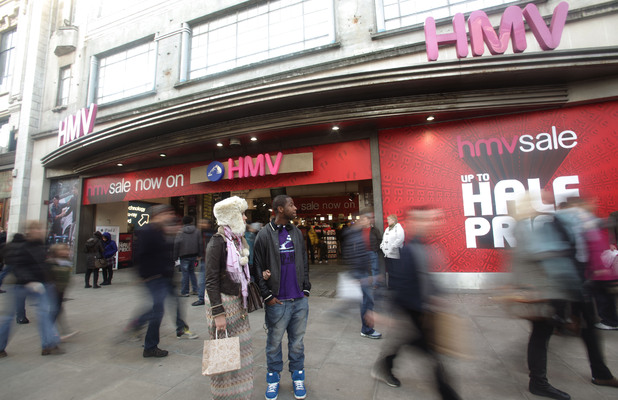
It was with a groaning sense of inevitability we greeted the news of the demise of HMV. I went into the Leeds store recently and the atmosphere of imminent closure was depressingly palpable. They had resorted to selling Leeds United football shirts and One Direction coffee mugs. Their Rock and Pop CD section, usually the company's bread and butter, was buried in a backroom upstairs. An ugly scene.

A friend of mine commented on the irony of a high street chain - nay, a "British institution" - which caused the steady decline of smaller independent record stores being usurped by the overwhelming empowerment of the internet. But I missed out on the quirky record stores you find in High Fidelity. We didn't really have that in Swindon, but we did have a HMV.

Not only was it a prime spot for social gatherings, but as a bored kid you could easily waste hours in there - rifling through the CD racks and movie posters, reading CD sleeves or listening to the latest singles. I knew every inch of that store. I bought my first CD single there (Seal's Kiss from a Rose).

I remember trying to buy Boom Boom Boom by The Outhere Brothers on cassette single, only to be refused by an intimidating assistant who had clearly heard the record and knew, at 10 years old, that I wasn't quite ready for that level of trash talk. I bought all my favourite boyhood punk albums there: Operation Ivy, The Sex Pistols, Green Day. When I was very young, I would rate other towns by the size and scale of their HMV stores. "Shall we go to Oxford today?" Mum might ask. "Yeah, their HMV is massive!"

I'm pining over a misspent youth as much as I am another failed high street chain. HMV remains a crucial chapter in the formative years of most people my age, which is why this closure hurts more than Our Price and Virgin Megastore put together. Now that music is no longer something you pick up, hold, read, save your pennies to buy or lend to a friend, the need for vast retail space is utterly redundant. Streaming software like Spotify is affordable, expansive and convenient. But where's the romance? With HMV's closure, those days are now well and truly mincemeat.

Saturday, 12 January 2013

The Savile Report


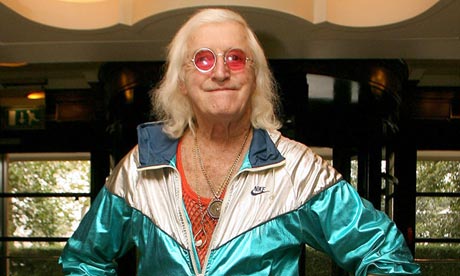
A year before his death, I interviewed Jimmy Savile as part of my editorial duties at the Leeds Guide. In 2009 he was a popular celebrity, a knight of the realm, the eccentric philanthropist with access to everywhere from the nation's top charities to the BBC to Downing Street.

His house overlooked Roundhay Park here in Leeds, and he could often be spotted jogging around its green surrounds or messing with the meals at his favourite local restaurants. He had just secured a new undergraduate training scheme to help junior doctors and nurses with their medical research, and I wrote a congratulatory, if slightly sardonic first-person appraisal.

Savile had been vocally supportive of our magazine since its inception. We had access to his mobile phone number and he was an obvious, if perhaps lazy, target for us to gather local celebrity comment. I initially left a voicemail asking him to call the office, which he did. I was away on lunch so he left a message with my colleague: "Tell him it's Robert De Niro, he owes me money."

It was a rocky interview. I remember his impatience at the fluidity of the questioning, his attempts to steer and control the interview. But he eventually thawed and spoke with nostalgia of "inventing DJ-ing" at the Leeds Mecca - or at least the notion of using two turntables - his phobia of technology and his thoughts on death. With his "pop pals" Elvis, John Lennon and Michael Jackson dead, there would be "one hell of a band in heaven."

If heaven exists it would now seem incongruous to find Jimmy Savile in it. Following the release of the Savile Inquiry, Deborah Orr in the Guardian described him an "evil genius". He controlled his eccentric public image as an affront to mask five decades of calculated sex crimes - abuse at 14 hospitals, over 450 allegations, 34 confirmed rapes and victims as young as 13.

In hindsight, we played directly into his hands - another ploy for his mass media manipulation. When Savile died his gold casket lay in state for the general public to pay their respects. Even in death he had the last laugh.

Like all bullies, Savile's cruelty was underpinned by intimidation on all levels, from the authorities investigating to the victims themselves. Many questions still need to be asked of those who saw the abuses take place and did nothing. The danger, says Orr, is that the Savile case will be seen as "entirely exceptional". The fallout from Savile should surely be that the voices of the abused are not ignored. Police failed to prosecute Savile during his lifetime despite a litany of allegations. It may take time to restore the confidence of victims of such abuse, but the Saville reports are a prime starting point.

Saturday, 29 December 2012

The Toxic Math Christmas Special

We had a lovely Christmas in York; its old cobbled streets looking positively Dickensian. The only thing lacking was a rabble of street orphans. The York Minster is having its east wing stained glass window restored in painstaking detail. We did sheepishly take some photos but I'm never too sure on the etiquette in churches. I have seen people asked to take their hats off. In Vatican City you can't even talk. In some holy places, women have to cover their hair. (Perhaps they can borrow something from the hat racks?) In some Russian Orthodox churches, you can even go to prison for impromptu punk gigs. It's all very confusing.

Trying to get out of York was interesting, as the station descended into the sort of deranged madness you find in disaster films. Trains - the ones that actually existed in a recognisable, tangible sort of way - were running chaotically late. Shoppers laden with bottles and bargains were left staring at digital billboards as their limited holiday time drifted away. I got on the 1357 to Manchester Airport about 20 minutes after it was due to depart. The reason for the hold up: "We apologise for the late running of this First TransPennine Express service to Manchester Airport," a stoic voice declared, "but our driver hasn't had his break yet." During the season of goodwill one has to be charitable.

Another year, another cunning attempt to disguise the taste of sprouts. Hugh Fearnley-Whittingstall is a firm traditionalist who steams his sprouts with whole garlic. We whipped a spoon of Boursin cheese into ours, but people do all sorts: whipped and sliced and blended beyond all recognition. Of course if you don't like sprouts to begin with then I suggest simply replace the sprouts with something you do actually like. On Christmas Day, we had a French feast including foie gras, champagne, saucisson and anchovies, duck legs and ratatouille. I had never eaten foie gras before - the tins had been secured by our French friend via Saint-Tropez. The taste wasn't too dissimilar from most liver patés and not overwhelming enough to warrant the cruelty involved in its production. But try telling that to the French.

At the start of the month, Brits spent £19m an hour over a 24 hour period on December 5th, or 'Cyber Monday' according to the Mail. This was the day the UK bought most of their Apple iPod Touch's and iPad 2's, Harry Potter DVDs and Lego. As a child, the only thing I ever desperately wanted was a replica of the Cats' Lair - the formidable fortress home of the Thundercats, complete with laser light, hidden jail and movable paws. I would have fought tooth and nail for one of those; killed if I had to. Perhaps this is how children feel about the iPod Touch nowadays? The want hasn't changed, although the technology clearly has. I never did get a Cats' Lair, by the way. I see this now as a valuable lesson on how to prepare children for dealing with life's many disappointments. Not that this has left me in any way cynical about Christmas. Did I mention Santa Claus isn't real? Happy holidays everyone.

Sunday, 23 December 2012

Top 5 List of Lists of 2012

Everyone likes a neatly compiled end-of-year list at this time of year – the end of it. But how can you possibly decipher the best lists from so many other lists out there? Well, TM has the answer: you need a list, of course.

5. The Top-Earning Dead Celebrities of 2012
Forbes had the foresight to compile this list back in October, presumably hoping that Donald Trump wouldn’t keel over in the interim. This puts big-spending silver screen luvvie Liz Taylor on top of the list for 2012's wealthiest dead celebrities. She earned US $210 million this year. An auction of her extravagant belongings by Christie’s brought in $180 million of that. A staggering sum, but then she did own pearl necklaces from the 16th century and an original Van Gogh. Death has certainly proved to be a wise investment for Michael Jackson. He was promptly signed to a new album deal by his old record company, Sony, which is quite an achievement, especially after he called them all racists. My sympathies go out to any aspiring young bands who would have loved an album deal only to have lost out to a dead guy. Jacko stacked up $140 million in 2012. Jackson’s former father-in-law Elvis Presley is third on the list, earning $55 million. Just think how many cheeseburgers you could buy with that? 

4. The 140 Best Twitter Feeds of 2012
Time’s tech team took time out, it seems, to compile a list of the Twitter feeds which are “shaping the online conversation”. I’m not too sure how you go about shaping a conversation. My guess is that it has something to do with thinking outside the box. In order to compile a list like this you clearly need to be wrestling with an alarming Twitter addiction. This was the year microbloggers seemingly lost the connection between their brains and their finger tips. I’m looking mostly at professional footballers and Sally Burcow here (pictured), but quite a few big organisations have needed to brush up on their social media skills this year. Like the NRA, who tweeted “Good morning, shooters. Happy Friday!” the day after the Colorado cinema shootings. Inc. have put together the 7 Worst Tweets of 2012 which is another great list full of more abhorrent tweeting, corporate cock-ups and #epicfails. 

3. 10 New Words of 2012
The Telegraph have fun compiling 10 new words which have really got up their nose in 2012. Without sounding like too much of a pedant, most of these aren’t technically new words but portmanteaus and acronyms. “Amazeballs” isn’t mentioned here, before you go looking for it. Although a derivative it deserves to be a new word on the basis of making absolutely no sense. Instead, The Telegraph hate “shamazing”, coined by X Factor judge Nicole Scherzinger and then repeated by David Cameron, but then she could have said “shamazeballs” which would have been truly awful. I would still like to see David Cameron say that one. “Mr Osbourne, your Budget reform speech was totes amazeballs,” adding, “I am well jell.” According to Fiona McPherson, senior editor at the Oxford English Dictionary: “In a decade’s time, some will still be around, while others are year-specific. We’ll look back and ask, 'What was that all about?’” We can then put all of this down to one giant omnishambles.

2. Pitchfork: Best Albums of 2012
Ah, Pitchfork. Where would we be without your literary, lefty, trendsetting ways? Still listening to Steps, presumably. Pitchfork is the only music website where you can read a review on ambient glitch hop and know even less after reading it. Their opinions set the playlist for most iPod’s these days, which means Kendrick Lamar (number one and pictured) can expect a big bump in his Spotify ratings. But sorry, have you actually heard the Swans album (number five)? It’s really hard work. It sounds like a hellish ambulance ride sludging its way to the Jim Morrison Funny Farm. Stuart Berman writes that after hearing the album, “you’ll feel physically and emotionally exhausted.” That’s how Pitchfork recommend things. While I’m offering unsolicited opinions, my favourite song of the year is Lone Wolf’s The Swan of Meander. It’s a gorgeous, enveloping and textured swoon which imparts some new hidden delight every time I hear it. He’s touring soon, too.

1. Top 10 Celebrity Mysteries of the Year
I thought I would have a stab at solving some of E!’s celebrity mysteries of 2012. I glanced over a copy of Now! at the hairdressers the other day, so I think this makes me uniquely qualified. “Why can’t Lindsay Lohan stay away from clubs?” Because they are great places to relax and have fun. “When will Brangelina marry?” Next year in a very private ceremony which will not be widely reported by unctuous gossip hounds. “What did we really find on Mars?” A Starbucks. “Why does Taylor Swift keep dating high school boys?” Because she needs their coursework, hair products and skinny jeans to create a highly potent substance which gives her special singing powers. “What is inside the royal womb of Kate Middleton right this very second?” A baby.

Thursday, 15 November 2012

Telly Ache

When you’re unemployed, simple daily tasks take a lot longer. Breakfast lasts for three courses. A shower becomes Homer’s Odyssey. And daytime television is the procrastinator’s sworn nemesis, because the demoralising truth is nobody has ever achieved greatness by watching four back to back episodes of Come Dine with Me.

I had this epiphany during an episode of Homes Under the Hammer. It’s not even a bad show, but it has this hypnotic, repetitive, anaesthetic appeal that numbs your synapses, mushing your brain into a property pulp, washing over you like some innocuous fart. It’s the television equivalent of staring into a coal fire or a washing machine. It’s just there.

The show fits perfectly into UK TV’s daily dump of daytime discharge. The only reason you would voluntarily sit and watch Homes Under the Hammer is if you were infirmed, being kidnapped, trapped under a coffee table or hopelessly unemployed. There are currently 2.51 million people unemployed in Britain. The ratings must be huge.

I wouldn’t have thought the TV map could change so much in my two and a half year absence from these British Isles, but who could have guessed the current godlike deity status of Gary Barlow – an ex-Take That singer - or the fact a comedian like John Bishop could sell out the O2 Arena. To my ears, he still sounds like a darts player.

Speaking of The X Factor, there now seems to be an Essex version of Cheryl Cole sitting in Cheryl Cole’s seat. I actually thought it was Cheryl Cole for a minute, probably miming. Not that she would do that, of course.

Sardonic Apprentice underling Nick Hewer was an inspired choice for Countdown. He gives the droll impression that the show is constantly distracting him from a horse race at Cheltenham. I like it when he has to interview his guests and forgets to stop talking after he’s asked a question. Out of all the pseudo-celebrities enjoying partial acclaim when I left the country, Nick Hewer’s ascendance to daytime stardom is particularly puzzling. What’s next? Bargain Hunt with Duncan Bannatyne? Loose Women with Ann Widdecombe? Daybreak with Aled Jones? Hold on, that last one appears to have actually happened.

When I left the country condescending bear-baiter Jeremy Kyle was being hauled over the coals for exploiting the vulnerability of his guests. His reward: an American version of his TV show and seemingly 24 hour rotation on ITV2 (now to renamed Irritating TwatVision 2, or something). He has probably been given a pay rise and made Head of Pernicious Programming. Give it a year and he’ll be running for London Mayor.

I always wonder whether anything good comes from these programmes. Do you think the guests leave saying, “Thank you Jeremy for that insightful and at times physical debate. Following the lessons we have learnt today and under your insightful guidance we hope to go on with our lives in a more positive and compassionate manner. Particularly now the DNA test proves the baby is Darren’s. Thanks.”

Noel Edmonds’ new fuller beard is fascinating. With his floral shirts and tumbling locks he looks like a seventies version of Aslan. Deal or No Deal still deserves some credit for making the opening of a box look like a courtroom drama. It has been on nearly every day for seven years now. Seven years, for Christ’s sake. Richard Osman, of Pointless fame (more on that in a minute), said in this article that Deal Or No Deal is not about luck, but rather knowing when to quit. “It is essentially ‘stick or twist’ in the same way as any job or relationship you’ve ever had is,” he writes. “What man, when his mind turns to marriage, hasn't thought: ‘It's a lovely offer, but perhaps I should just open three more boxes?’”

Breakaway is a particularly lumbering, drawn-out quiz show where conceited one-upmanship is rewarded over coalition. Individual contestants can ‘breakaway’ from their team to answer questions on their own and therefore gobble up all the prize money themselves. There is a political and social metaphor in this. Host Nick Hancock is tolerable but a little patronising. “Now are you sure you want to do that?... They were really tough questions weren’t they?”

My favourite daytime quiz show is now BBC1’s Pointless, hosted by the always-affable Alexander Armstrong and the aforementioned Osman. The format is a loose appropriation of Family Fortunes, where contestants find the least likely answers based on the most common responses to audience surveys. So, for example, you probably know that Australia is a country beginning with A, but then a country like Antigua and Barbuda, which also begins with the letter A, may have slipped your mind. Pointless answers are ones that are both correct and so obscure that nobody in the survey thought to mention them.

It’s a quite cynical concept, really, having to second guest the ignorance of the general public. I always wonder where they find the time and the people to question for these surveys. But with so many out of work it’s obvious. You can probably do it by pressing The Red Button. During Homes Under the Hammer, no doubt.


We saw Singin’ in the Rain at the Palace Theatre in London's West End last week and what a jolly thing it was, heightened somewhat by exceptional seats within splashing distance of the stage. The gags are 60 years old but still great, and actress Katherine Kingsley has a ball playing verbally-challenged silent screen diva Lina Lamont, elaborating on Jean Hagen’s screechy drawl with ear-splitting aplomb. Director Jonathan Church gives both Lina and Kathy more stage time than Gene Kelly ever did in the movie. Here they even get their own songs. I never quite bought Kathy’s sudden infatuation with the enigmatic yet egomaniac Don Lockwood. Here she is given pivotal breathing space to assess the merits of dating a megastar with a licentious reputation.

Singin’ in the Rain works because of its celebration of movement (a universal language) and the basic premise celebrating the magic of cinema, something everyone can share. It may be the most damn near perfect film about films ever made, but it was conceived as a comedic throwaway to string together the hits of MGM songwriters Nacio Herb Brown and Arthur Freed. Gene Kelly considered his greatest work to be An American in Paris, filmed the year before. The extended all-dancing Broadway finale which concludes SITR was a formula copied from Kelly’s mammoth ballet sequence at the end of An American in Paris. The film also just about killed the musical as a viable money-spinner in mainstream cinemas, as rock and roll rebels and the rise of independent film all but killed off the studio system and the big budget musicals they championed.

But watch the show, it’s a triumph. However, a word of caution; expect to get a bit wet in the first five rows. The cast use the final 10 minutes for a vengeful, stomping splash-around as the stage is flooded and the audience duck for cover. Some people actually brought umbrellas, which was a nice touch.

Tuesday, 16 October 2012

Sun, Sea, Sex and Sangria: A Weekend in Benidorm


Sticky Vicky's reputation precedes her. The things she can do with a ping pong ball will make your eyes water. I won’t go into too much detail on a family website like TM, only to say her routine is not restricted solely to ping pong. According to this, unfeasibly larger items like glass bottles, giant candles, light bulbs and, more disturbingly, razor blades. For her festive show she produces a Christmas tree. I wonder what she does for an encore?

Now approaching 70 (yes, 70), Sticky Vicky has been performing her act to shell-shocked tourists for over 30 years. She continues her seven-day-a-week grind to his day. She has now enlisted the help of her daughter who opens the show with an acrobatic magic act before her mother takes to the stage and takes her clothes off. And this is only one of the “attractions” on offer amongst all the seedy nightclubs touting “lesbian shows”, the free-entry all night “disco-pubs” and reams of tribute acts (Peatloaf, Michael Bauble, and so on), all centered along the notoriously chaotic confines of the so-called Yellow Brick Road. But we are a long way from Kansas. Welcome, then, to Benidorm.

To be fair, the Spanish coastal town has always been sex obsessed. In May this year Benidorm celebrated the 60th anniversary of then-mayor Pedros Zaragoza’s decision to legalise the wearing of bikinis. The decision was reached after a British woman was fined 40,000 pesetas for wearing one at a beach bar. In fear of losing the town’s appeal as a frisky tourist cash cow - especially at a time when the local fishing industry was fractured - Franco’s fascists turned a blind eye. Which is more than can be said about the tourists. Benidorm welcomes five million of them every year, all in search of sun, sea, sex and sangria.

But now in 2012, is Benidorm finally suffering the hangover from 60 years of hedonistic overkill? The east coast of Spain has suffered dramatically from the fallout of the noughties Spanish property boom and the subsequent Eurozone crisis. This is evident from the number of derelict bars you can see, and the building projects abandoned mid-construction. Now there is a genuine fear the cranes might collapse, like they did a couple of days ago near Sotogrande on the Costa del Sol. According to an engineer questioned on the Olive Press website: “Because they are so close to the sea, the salt in the air is eroding the cranes much quicker than would be the case with structures further inland.” A disconcerting thought.

And do I denote a touch of chippiness from the harassed, overworked bar staff? One cafe refused to put onions in their cheeseburgers because it “stinks the place out”. It’s hard to argue against something like that. Another sounded her frustration at the thought of replacing specific elements of the “large breakfast” option. Her reaction seemed to suggest I had asked her to solve the Spanish debt crisis rather than put a spoonful of baked beans on a plate. I sensed she was clearly someone in desperate need of an escape.

The tourists are older here, too. Following the packaged tours of the 1980s and the subsequent violence that ensued, younger revelers decided to forgo the hen and stag parties of Benidorm for the burgeoning bedlam found in Ibiza and Malaga. There's a running joke in the ITV comedy series Benidorm about this, where the elderly cantankerous Madge barges her way through the busy streets on a mobility scooter without actually needing to use one. Wheelchairs and scooters rent from 20 euros a week. The flyers are everywhere.

But coming to visit for a long weekend outside the July-August peak season, everything seems business-as-usual. The popular TV show has no doubt helped to further promote the town in the minds of overseas travelers, and I found the beaches friendly and well maintained. Surprisingly, there are actually some very pretty aspects to Benidorm. I loved the views from the church of San Jaime and the charismatic side-streets and market stalls of the Old Town, like a scene straight out of Granada, and the epic, seemingly endless mountainous surrounds to the west which so define the landscape in this part of Spain. The joy in overlooking a vast ocean vista with caffe con leche and tapas on a glorious day is surely one of the world’s greatest pleasures. No wonder the Spanish don’t get any work done.

The old town is also the best place to take in the full scale of Benidorm’s 6km radius of revelry. Since the 1960s, the playa has become a breeding ground for hotels to rise indiscriminately into the sky - the tallest at 186 metres. But now there is just no escaping the colonising British, as they liberate their minds - and most of their stomach contents - from the cold, workaday routine of life back home. As a result, Benidorm has taken on the puzzling moniker of a “home away from home” for the Brit – the kind of place they can relax without having to concern themselves too much with any of that foreign stuff.

I can’t say I understand a lot of this; particularly those creature comforts that supposedly define "Britishness". Here, "Britishness" is aggressively advertised on every street corner: Guinness and Tetley’s, all day breakfast, the Daily Mail, Sunday carvery, Sky Sports, "Tracey and Tony from Wales welcomes you" and English spoken everywhere. The conditioning is so complete after two nights that a couple conversing in Spanish at the bar sounds particularly alien. “Maybe they’re tourists?” a friend asks. Hold on, I thought we were the tourists?

This manufactured paradise comes at a cost: the ugly flipside of our drinking culture is not a British trait which serves us well, particularly abroad. Benidorm takes every rebellious, binge-drinking, kebab-chewing Saturday night you’ve seen in Leeds, or Bristol, or Blackpool or just about anywhere and spits it right back at you on a regular basis. No wonder the locals have scarpered to the hills.

Now there is talk of a 5am curfew to give the authorities time to “clean up the empty bottles, the rubbish, the vomit”, according to an article in the free Round Town paper. But 5am seems pointless, like shutting the stable door after the horse has bolted. Another tactic may be fining promoters up to 60,000 euros for organising bar crawls. “It’s an unforgivable image,” says Paco Carrasco, owner of a chain of nine pubs. “Nobody wants to be heading into work, or down for an early morning walk on the beach to be confronted by… a group of loud drunks.” I would agree, but then is there anything more British than complaining?